RSS

Blog

Fix Any Rip on Your Couch at Home

How to Fix a Rip in Your Sofa Like a Pro
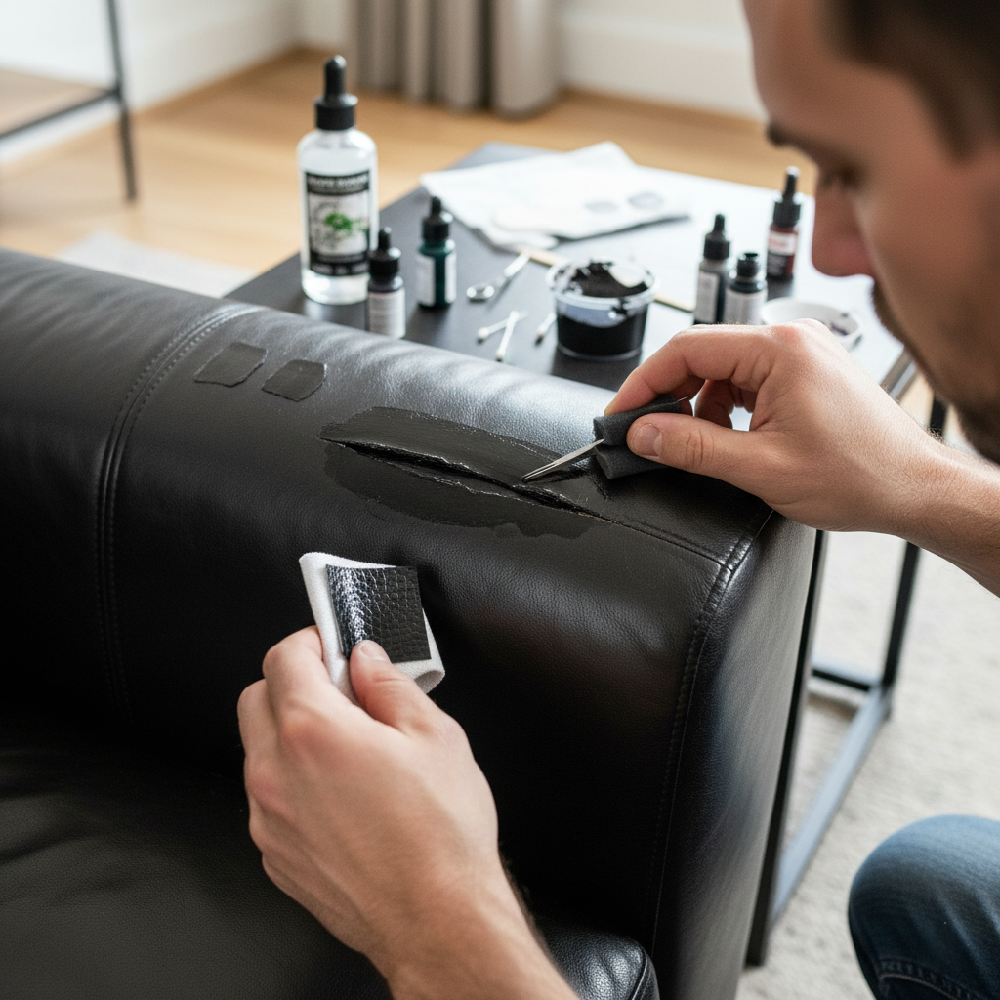
 

Close-up of a man cleaning a tear on a brown leather sofa with rubbing alcohol to prepare the surface for patching.


That moment when you spot a rip in your favorite leather sofa can be heartbreaking. Whether it's a small tear from a mischievous pet, a split along a seam, or a larger gash from moving furniture, the damage can feel permanent. You immediately start thinking about expensive reupholstering or, worse, replacing the entire piece.

Stop right there!

The good news is that most common rips and tears in leather furniture are completely repairable right in your own home. You don't need expensive professional tools or previous upholstery experience. With the right technique, a little patience, and a dedicated DIY leather repair kit, you can seamlessly mend that rip, restore the color, and prevent further damage, saving yourself significant time and money.

Ready to restore your leather couch to its former glory? Let's dive into the step-by-step guide for fixing that rip and making it virtually invisible.


How to Repair a Rip in Your Leather Sofa: Step-by-Step Guide


Successfully repairing a rip or tear in your leather sofa requires a methodical approach, especially if you want the fix to be strong and invisible. This process is focused on using a standard DIY leather repair kit, which typically includes a backing cloth, adhesive/filler, and color dye/compound.


HOW TO CLEAN LEATHER COUCH. Get the expert guide to deep cleaning, conditioning, and 100% odor removal. Your sofa deserves it!


Phase 1: Preparation and Stabilization


The goal of this phase is to stop the rip from getting larger and create a stable foundation for the repair compound.


Step 1: Clean the Area


Before applying any product, the area must be spotless.

  • Wipe: Use a cloth dampened with rubbing alcohol (isopropyl alcohol) to clean around the rip. This removes body oils, dirt, and any residual leather conditioners that could prevent the adhesive from bonding.

  • Dry: Allow the area to dry completely.
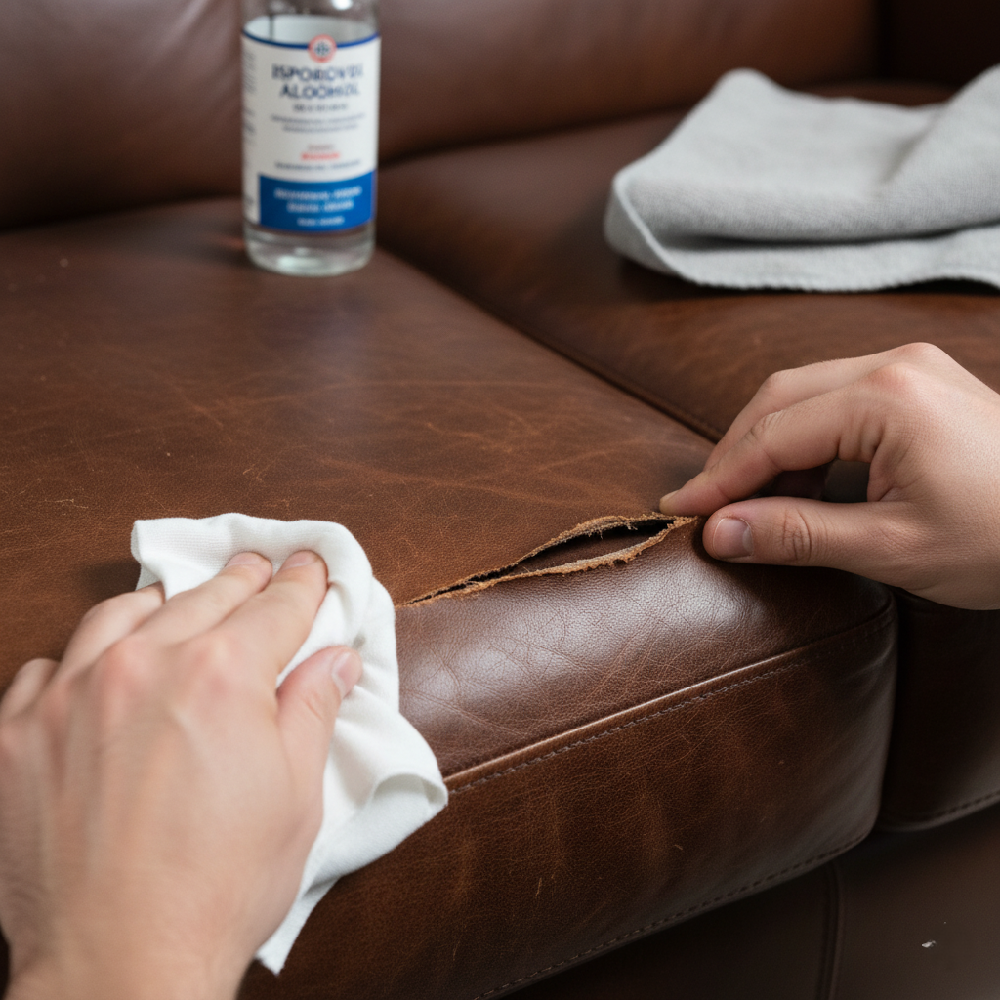
 

Close-up of a man cleaning a tear on a brown leather sofa with rubbing alcohol to prepare the surface for patching.


Step 2: Trim the Rip


If the tear has any frayed, loose, or wispy threads of leather, carefully trim them away with small, sharp scissors. The edges of the rip should be as flat and clean as possible so they don't protrude under the patch.


Step 3: Insert the Subpatch (The Foundation)


This is the most critical step for strength. The subpatch (or backing cloth) provides the structure for the repair.

  • Cut: Cut the included subpatch material so it's about half an inch larger than the rip on all sides. The goal is for the patch to lay completely flat under the damaged area.

  • Insertion: Use tweezers to slide the patch material underneath the rip. Center it so the entire tear is sitting over the fabric.

  • Secure: Apply a small amount of strong leather adhesive (often found in the kit) or super glue to the edges of the subpatch, securing it to the underside of the original leather around the perimeter of the rip. Do not glue the rip itself yet. Let the adhesive cure according to the kit's instructions.
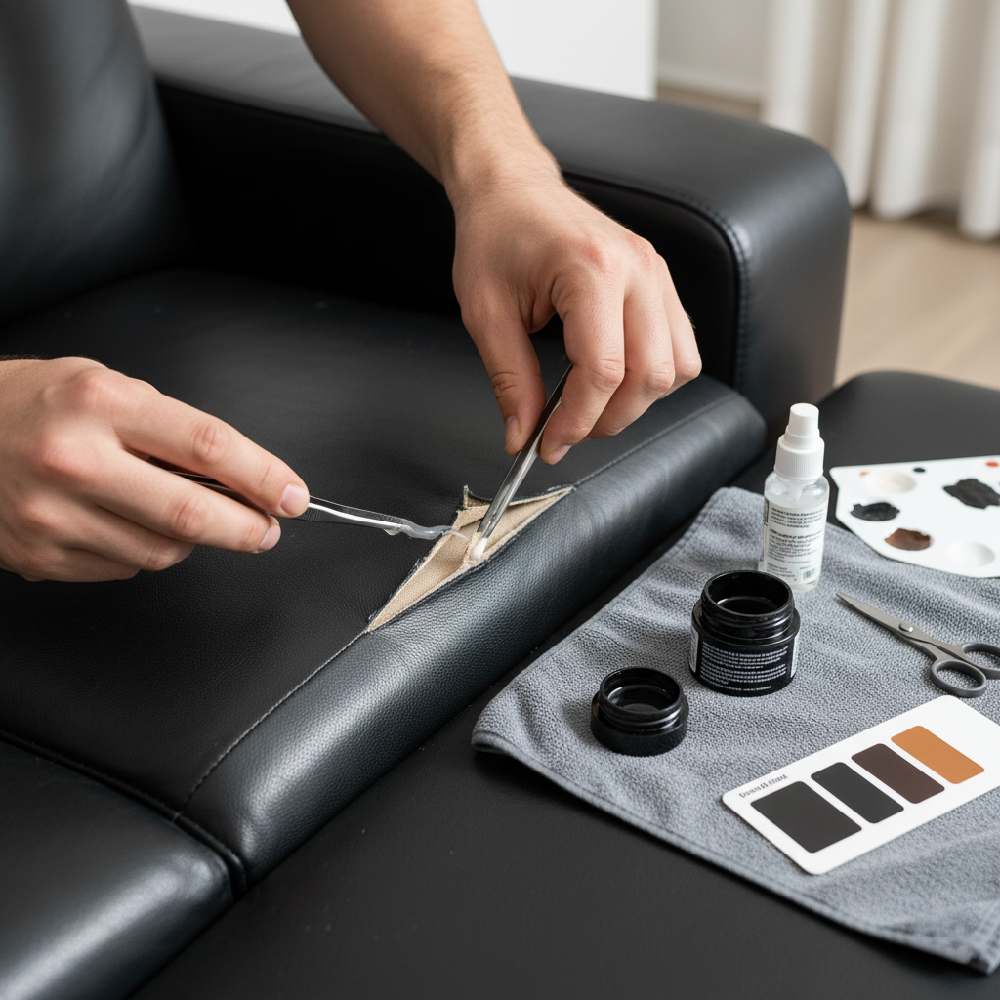
 

Image showing a man using tweezers to insert a backing cloth or subpatch under a small rip in a black leather couch to stabilize the tear.


Phase 2: Filling and Texturizing


Now that the rip is stable, you will fill the gap and prepare the surface for coloring.


Our new guide reveals 3 easy methods to make any couch taller, even those without legs! Say goodbye to low-rider seating.


Step 4: Apply the Repair Compound/Filler


The repair compound is a thick, flexible paste designed to fill the void.

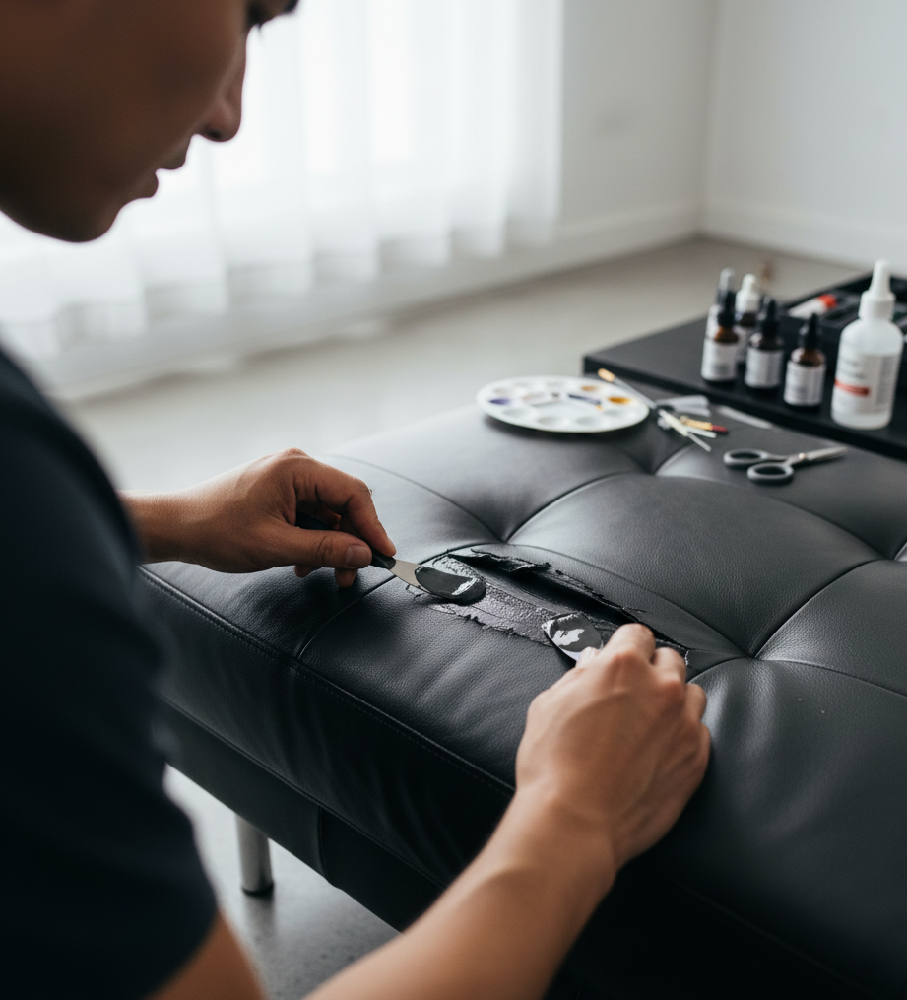
  • Application: Using the included applicator or a small spatula, apply a thin layer of the compound directly into the rip. Work it into the gap, smoothing it out so the surface is flush with the surrounding leather.

  • Build Layers: For deep rips, it's essential to apply multiple thin layers rather than one thick one. Allow each layer to dry (usually 30 minutes to an hour) before applying the next. This prevents shrinkage 


Step 5: Add Texture (If Necessary)


If your leather has a noticeable grain (texture), you'll need to mimic it for an invisible repair.

  • Option A (Kit Method): Many kits include a small piece of textured paper or vinyl. Press this paper onto the final, still-wet layer of filler before it dries. When you peel it away, it transfers the grain pattern.

  • Option B (Slight Grain): Gently dab the wet filler with a sponge or a piece of plastic wrap to create a slightly irregular, non-smooth texture.


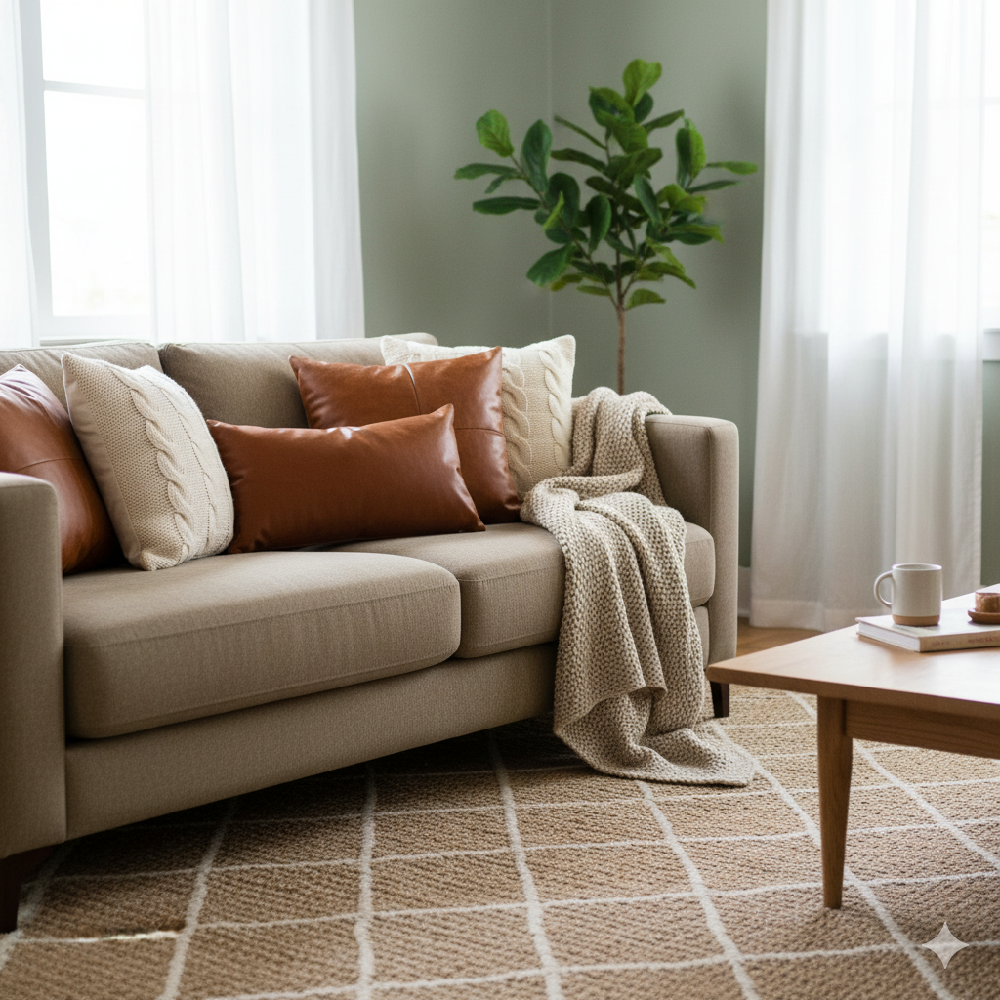
Revamp your living room! Discover the perfect carpet colors to pair with your brown leather sofa in our new styling guide.


Phase 3: Coloring and Finishing


The final phase uses color matching to blend the repair perfectly into the sofa.


Step 6: Color Match and Prep


Leather repair kits often include several color dyes (tints) and a mixing container.

  • Mix: Start with the base color provided and add small drops of the darker or lighter tints until the color matches the undamaged leather on your sofa. Always mix more color than you think you need!

  • Test: Crucially, test the mixed color on a hidden spot of the sofa (like the rear skirt) and let it dry. Leather color often darkens as it dries. Adjust until the dry test patch matches.


Step 7: Apply the Color Compound


  • Layer Thinly: Using a small sponge, brush, or cotton swab, apply the matched color compound thinly over the repaired patch. Extend the color slightly beyond the patch onto the original leather to blend the edges seamlessly.

  • Feather the Edges: Use a light, dabbing motion around the outside edge of the repair to "feather" the color into the surrounding leather.


Step 8: Final Cure and Conditioning


  • Final Dry: Allow the repair to dry completely, typically 24 to 48 hours, depending on the number of filler and color layers applied. Avoid sitting on the area during this time.

  • Seal (Optional): Some advanced kits include a final clear sealant or topcoat to protect the repair.

  • Condition: Once cured, treat the entire area with a quality leather conditioner. This reintroduces oils lost during cleaning and helps the repaired area blend naturally with the rest of your sofa.


Pro Tip: For rips larger than 3 inches, consider seeking a professional, as the stability required for a long-lasting fix becomes much more challenging for a DIY repair.


From thrones of power to your cozy living room: Dive into the fascinating evolution of the sofa! 🛋️Discover the hidden history of your favorite couch in our latest blog post!
Space-Saving Bed Solutions: Modern Designs for Small Bedrooms

The Best Bed Designs for a Bedroom


Your bed is not just furniture; it is the design anchor and the emotional heart of your bedroom—a sanctuary where both body and mind find rest. Choosing the perfect bed design requires strategic planning that transcends mere aesthetics, engineering your space for ultimate comfort, function, and style longevity. A truly great bed doesn't just look appealing; it fundamentally transforms your sleep quality and overall well-being.

This comprehensive guide provides an expert framework to help you select and position a bed design that aligns with your space, lifestyle, and wellness goals, making it a lasting asset in your modern bedroom design.


Part I: The Architectural and Structural Imperatives


Before falling in love with a style, you must verify the structural integrity and fit—the hidden engineering that ensures durability.


1. Sizing Your Sleep Ecosystem: The Absolute Minimums


The perfect bed size is a function of the sleeper, the room, and the critical floor space.

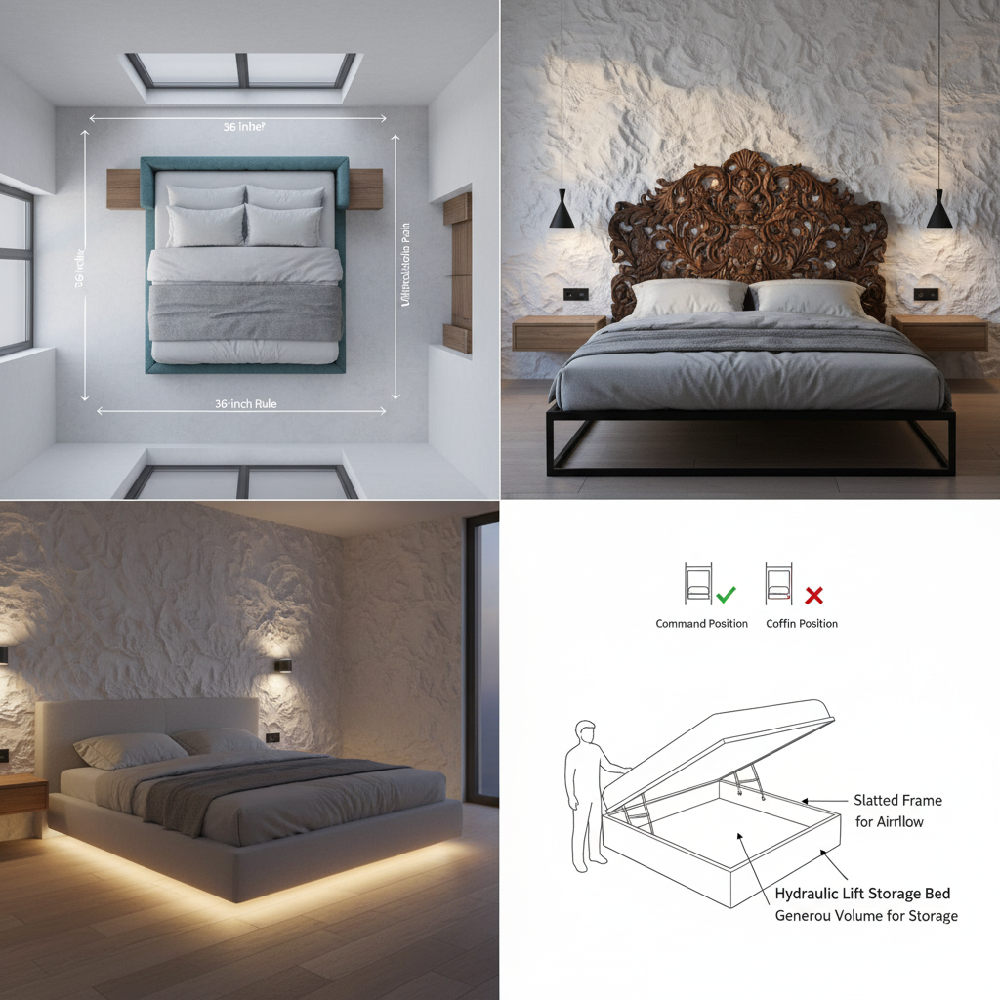
Bed Size Minimum Room Size (Approx.) Circulation Clearance The Golden Rule of Bed Sizing
Queen ($60" \times 80"$) $10 \text{ ft} \times 10 \text{ ft}$ $30 \text{ inches}$ The minimum safe distance for comfortable walking and movement around the bed.
King ($76" \times 80"$) $12 \text{ ft} \times 12 \text{ ft}$ $36 \text{ inches}$ Ideal clearance, essential for master suites and rooms featuring large dressers or seating.

Practical Tip for Small Spaces: If you have to compromise, prioritize the $30 \text{ inches}$ on one primary pathway (e.g., the side nearest the closet/door) and accept a $24 \text{ inch}$ minimum on the other side. Never block the immediate door access.


2. Structural Integrity: Platform vs. Traditional Framing


The core structure dictates mattress support, height, and overall frame longevity.

  • Platform Bed Design: The default for modern bedroom design. It uses a horizontal surface with rigid, closely spaced slats (wood or metal, ideally spaced no more than $3 \text{ inches}$ apart) to support the mattress directly.

    • Longevity Metric: Requires a durable central support beam running head-to-foot for King and Queen sizes to prevent catastrophic midline sag.

  • Traditional Rail Frame: Uses a simple metal or wood frame that mandates the use of a bulky box spring or separate foundation.

    • TCO (Total Cost of Ownership): Higher, as you must replace the mattress and a box spring/foundation over time, whereas a high-quality platform frame is often a one-time purchase.


HOW TO CLEAN LEATHER COUCH. Get the expert guide to deep cleaning, conditioning, and 100% odor removal. Your sofa deserves it!


3. Material Science of the Frame: The Durability Guarantee


The frame's material is the primary predictor of how long your bed will remain silent and stable.

  • Kiln-Dried Hardwood (Oak, Maple, Walnut): The gold standard for longevity. Kiln-drying removes moisture, preventing warping, cracking, and—most importantly—squeaking over time.

  • Engineered Wood/Veneer: Acceptable for low-stress components (like drawer fronts or non-load-bearing headboard panels), but the core frame structure should always be solid wood or reinforced steel.

  • Metal Frames: Highly durable, but look for heavy-gauge steel and secure, bolted connections (not flimsy hooks) to prevent rattling and lateral movement.


Part II: Bed Design Aesthetics and the Focal Point


The bed back design and overall style must be congruent with your room's function and narrative.


4. Iconic Bed Design Styles and Their Psychological Impact


Bed Design Type Core Mood Established Ideal Space Type Headboard Material Focus
Upholstered (Velvet, Linen) Cozy, Restorative, Soft Primary Bedrooms, Reading Focus Sound-dampening, High Comfort
Sleigh/Panel Bed (Wood) Grounded, Traditional, Stable Large Rooms, Classic Interiors Visual Weight, Heirloom Quality
Floating Bed Minimalist, Architectural, Open Modern Bedroom Design, Small Spaces Clean Lines, Illusion of Space
Canopy/Four-Poster Dramatic, Secure, Luxurious High Ceilings ($9 \text{ ft}$+), Statement Focus Verticality, Textural Draping


5. The Headboard: Comfort vs. Vertical Statement


The bed back design is your opportunity for personalization and functional support.

  • The Comfort Headboard: Must be thick, padded, and angled slightly backward to support the natural curve of the spine for sitting. Height should be sufficient to clear throw pillows.

  • The Vertical Statement Headboard: For modern bedroom design, consider an oversized headboard that extends to the ceiling or across the full width of the wall (a "feature wall"). This draws the eye upward, giving the illusion of a grander scale.

    • Trend Alert (2026): Designers are favoring textured walls and plaster reliefs behind the bed over traditional artwork, creating a tactile, subtle backdrop that feels alive to the touch.


Revamp your living room! Discover the perfect carpet colors to pair with your brown leather sofa in our new styling guide.


Part III: Ergonomics, Wellness, and The Flow of Energy


A truly optimal bed design integrates with your personal well-being and the energetic flow of the space, following principles used by top interior designers.


6. The Command Position: Applying Feng Shui Principles


The placement of your bed is the most crucial decision for creating a restful and energetically stable space. The "Commanding Position" in Feng Shui is designed for psychological security:

  • Ideal Placement: The bed should be against a solid wall (no windows or doors behind it) and diagonally facing the door. This allows you to see anyone entering without being directly in line with the entry point.

  • Avoid:

    • The Coffin Position: Feet pointing directly toward the door. Symbolically represents an exit.

    • Under Beams/Sloped Ceilings: Creates a feeling of pressure or "crushing," disrupting restful sleep.

    • Mirrors Facing the Bed: Believed to amplify energy and restlessness, and symbolically invite a "third party" into a relationship.

  • Symmetry for Balance: Use matching nightstands and lamps on either side of the bed. This creates visual and energetic balance, supporting equality in relationships.


Our new guide reveals 3 easy methods to make any couch taller, even those without legs! Say goodbye to low-rider seating.


7. Strategic Storage Integration: The Hidden Utility


Clutter is a major source of visual stress in bedroom interior design. Integrated storage solves this without compromising aesthetics.

  • Hydraulic Lift Beds: The most space-efficient solution, offering $900 \text{ liters}$ or more of easily accessible, invisible storage for seasonal items, maximizing cubic feet rather than just square feet.

  • The Feng Shui Rule for Storage: If you must store items under the bed, they should be soft, sleep-related items (linens, blankets, pillows). Avoid storing work materials, shoes, or emotional mementos, as these can bring "active" or "stagnant" energy into your rest.


8. The Sensory Layering: Light, Texture, and Sound


A modern bedroom design appeals to all five senses to create a complete sensory environment.

  • Layered Lighting: Move beyond the single overhead light. Install sconces or pendant lamps that are hardwired to a dimmer switch for soft, adjustable ambient light. Add accent lighting under the bed frame for a cozy, cinema-like glow when walking at night.

  • Acoustic Comfort: Choose rich, heavy fabrics for bedding and drapes (like velvet or boucle). These materials not only add luxury but also effectively dampen sound, creating a quieter, more isolated sleeping environment.

  • Biophilic Design: Introduce natural elements to promote tranquility. This includes wooden bed frames, linen or organic cotton bedding, and subtle greenery (e.g., Snake Plant or Peace Lily) to naturally purify the air and reinforce a connection to nature.


Conclusion: The Bed as a Masterpiece of Wellness


Choosing the right bed design is the most significant investment you can make in your home and in your own well-being. By considering the structural integrity of the frame, adhering to the principles of optimal placement, and strategically layering light and texture, you transform your bedroom from a simple sleeping area into a personalized, restorative retreat.

Make a choice that reflects not just your style, but your commitment to quality sleep and lasting comfort.


Ready to elevate your sleep?


What is the most challenging constraint in your current bedroom—space, light, or storage—and which bed design solution addresses it best?


From thrones of power to your cozy living room: Dive into the fascinating evolution of the sofa! 🛋️Discover the hidden history of your favorite couch in our latest blog post!
How to Buy the Best Sofa: Essential Guide to Quality Frames, Durability, and Longevity

The Ultimate Sofa Buyer's Guide: Longevity, Quality, and Smart Design Choices


The selection and placement of a sofa set is an investment decision that merits the same rigor as buying a high-end appliance or an heirloom rug. The focus must shift from surface aesthetics to the Total Cost of Ownership (TCO), driven by structural integrity and material resilience. This report is your deep dive into the engineering, design psychology, and advanced maintenance protocols necessary to acquire a sofa that functions as a legacy piece.


Section 1: The Engineering Deep Dive: Evaluating Quality Beyond Upholstery


The expected lifespan of a sofa—whether 5 years or 25 years—is entirely determined by its hidden structural architecture. A high-end sofa is an engineered piece of furniture, not merely a cushioned box.


1.1 The Frame and Joinery: The Rigidity Protocol


The frame is the true skeleton, constantly fighting against gravity, friction, and the sheer inertia of people collapsing onto it.


Kiln-Dried Hardwood: The Science of Stability


The gold standard remains kiln-dried hardwood (oak, maple, beech, or birch). The kiln-drying process is a scientific necessity, reducing moisture content to below 7-8%. This pre-treatment stabilizes the wood, neutralizing its natural tendency to shrink, swell, bow, or warp in response to interior temperature and humidity fluctuations. A frame made from air-dried or non-dried wood will inevitably degrade prematurely, leading to a creaking, unstable frame within a few years.


The Joinery Hierarchy


Frame longevity is ultimately guaranteed by the joinery—the connection points. We assess quality by the reliance on carpentry over adhesives:

Joinery Technique Quality Level Rigidity/Longevity Benchmark
Mortise-and-Tenon Heirloom Standard Highest rigidity. The interlocked wood fibers are self-supporting, requiring minimal glue reinforcement.
Double Dowel Investment Grade Sturdy, precise connection using multiple pegs. Common in high-volume, quality manufacturing.
Corner Block Mandatory Reinforcement Solid wood or engineered wood triangles glued and screwed into inner corners. Essential for preventing rack and wobble.
Glue and Staples Only Temporary/Budget Joints rely solely on adhesive and friction. Prone to immediate failure under lateral stress. Strictly Avoid.

The Creak Test: A well-built frame should exhibit no twist or audible creaking when lifted slightly from a corner—a telltale sign of weak joinery or insufficient corner blocking.


Revamp your living room! Discover the perfect carpet colors to pair with your brown leather sofa in our new styling guide.


1.2 Suspension Systems: The Backbone of Comfort Retention


The suspension system provides the crucial mechanical support, preventing cushions from sagging directly onto the frame.

  • 8-Way Hand-Tied (8-WHT) Springs: This system uses individual coil springs, meticulously tied by hand in eight directions (front-to-back, side-to-side, and diagonally). This web-like structure ensures that the pressure on any single spring is evenly distributed across the entire system. While costly and labor-intensive, it offers individualized, superior support that can be repaired and tuned up, contributing to generational longevity.

  • Sinuous (No-Sag) Springs: For mid-to-high-range pieces, the sinuous spring system is the practical choice. It uses heavy-gauge (8-gauge is ideal) steel S-shaped coils attached to the frame. The essential quality indicator is the presence of at least two horizontal silent-tie wires clipped to each spring. These wires link the springs together, preventing individual springs from moving independently and reducing the potential for squeaking and metal fatigue.


Our new guide reveals 3 easy methods to make any couch taller, even those without legs! Say goodbye to low-rider seating.


1.3 Cushion Fill: Density, Resilience, and the Luxury Wrap


Cushion lifespan is measured not just by comfort but by its ability to rebound and resist permanent compression (sagging).

  • Foam Density: Density is the weight of the foam per cubic foot (a common measure is $1.8 \text{ to } 2.5 \text{ lbs./cu. ft.}$). High-density foam (over $2.0 \text{ lbs./cu. ft.}$) provides firmer support and resists compression for 10+ years. High-Resiliency (HR) foam is the best, offering the highest level of rebound and shape retention.

  • Layering for Luxury: The most durable and comfortable cushions employ a multi-layer system: a resilient high-density foam core for support, wrapped in a layer of synthetic batting (Dacron) for softness, and often finished with a jacket of down and feathers (a $90 \text{ percent}$ feather / $10 \text{ percent}$ down blend) for a plush "crown." This hybrid approach balances the structure of foam with the luxurious feel of natural fill.


Section 2: Upholstery: A Risk-Management Decision


The selection of upholstery is a calculus of aesthetic aspiration versus lifestyle risk.


2.1 The Investment Case for Leather


Leather's TCO is superior because it ages rather than deteriorates. A high-quality, full-grain leather piece will develop a rich patina—a soft sheen that develops from age, use, and light.

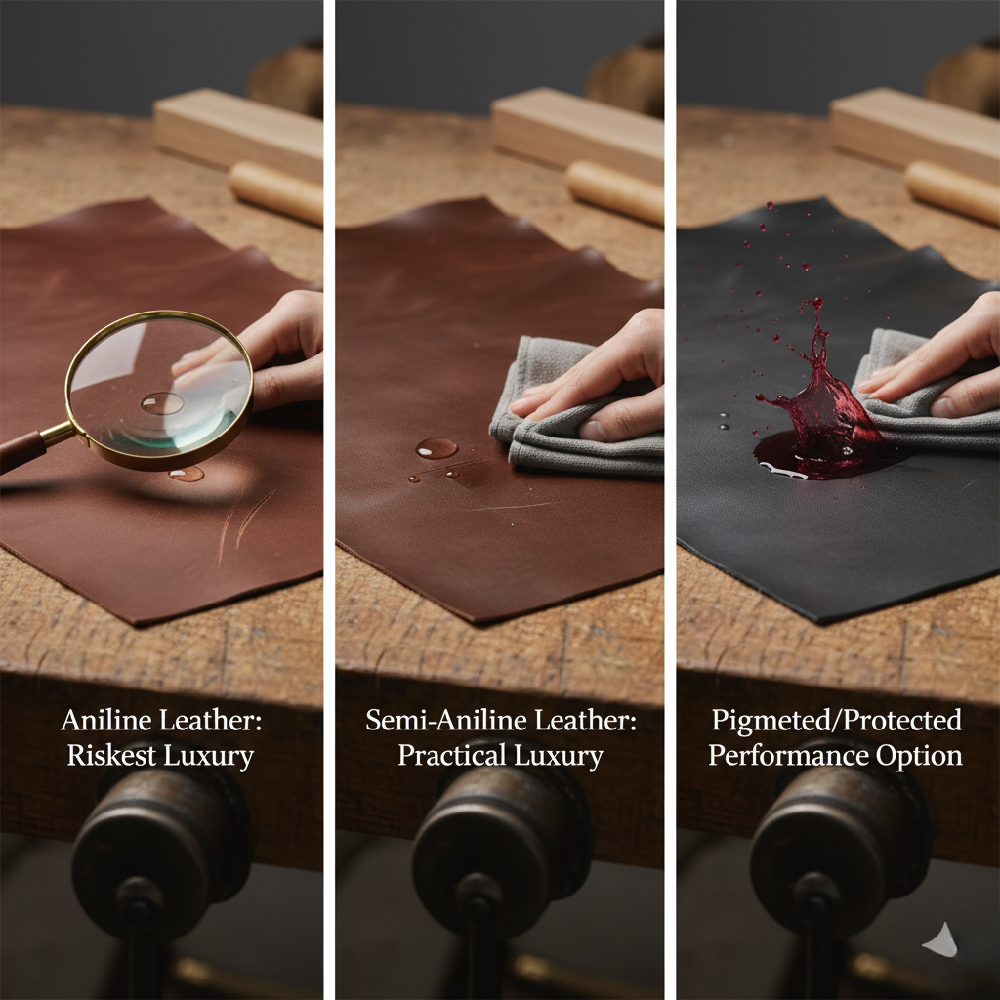
  • Aniline: The riskiest luxury. It is dyed with no protective coating, showcasing the hide's natural markings. It is extremely vulnerable to UV damage (fading), liquid absorption (staining), and scratching. Recommended only for formal, low-light spaces with minimal human or pet traffic.

  • Semi-Aniline: The practical luxury. It has a light, pigmented coating that offers moderate resistance to spills and sunlight while retaining much of the natural softness and breathability. This is the optimal choice for an investment-grade sofa in a moderate-traffic family environment.

  • Pigmented/Protected: The performance option. The heavy, uniform protective polymer coating sacrifices natural feel for maximum resistance to stains, fading, and heavy wear. Ideal for homes with young children, pets, or commercial use.


2.2 Advanced Fabric Performance


For households preferring fabric, focus on technical specifications beyond simple material type.

  • Double Rub Count: This is the industry standard for durability, measured by a machine repeatedly rubbing an abrasive cotton duck cloth against the fabric until the first thread breaks. A high-traffic residential sofa should have a minimum of $15,000 \text{ to } 20,000 \text{ double rubs}$. Commercial-grade fabrics can exceed $50,000$.

  • Microfiber and Synthetic Velvets: Modern microfiber and synthetic velvets (polyester or rayon) offer superb resistance to snags and spills. Unlike traditional leather, they are less prone to showing permanent, highly visible scratch marks from pet claws, making them a superior choice for pet owners who value low maintenance.


HOW TO CLEAN LEATHER COUCH. Get the expert guide to deep cleaning, conditioning, and 100% odor removal. Your sofa deserves it!


Section 3: Strategic Placement: Zoning and Flow Psychology


A poorly placed sofa can ruin the function of an impeccably designed room. Strategic placement adheres to principles of flow, conversation, and visual scale.


3.1 The Psychology of Conversation and Flow


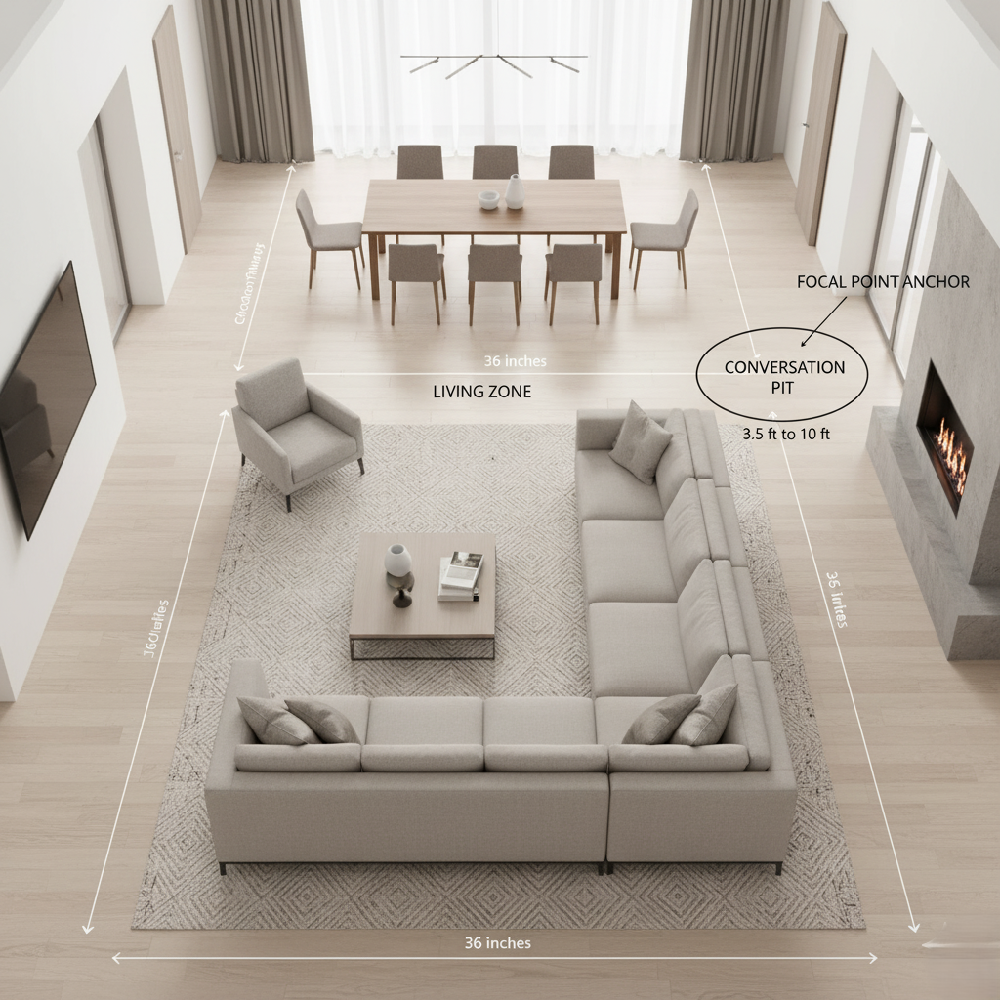
  • The Conversation Pit Rule: Seating must facilitate easy, natural dialogue. The ideal distance between primary seating pieces (sofa to opposing armchair or sofa) is $3.5 \text{ to } 10 \text{ feet}$. Beyond 10 feet, occupants must raise their voices, breaking the intimacy of the space.

  • Circulation Pathways: The main pathways around furniture groupings must maintain $30 \text{ to } 36 \text{ inches}$ of clearance. Tighter routes (between a sofa and a side table) can be $18 \text{ to } 24 \text{ inches}$. Never block the main entry point to the seating area.

  • The Focal Point Anchor: Every layout must revolve around a focal point (fireplace, window view, or television). The primary sofa should be positioned to face and anchor this focal point, giving the room a natural orientation.


3.2 Mastering L-Shape and Sectional Zoning


Sectionals are potent tools for dividing space in open-concept living/dining/kitchen areas.

  • The Room Divider Technique: Place the sectional so that the back of its longest piece is floating away from the wall and is perpendicular to a main architectural line (like the kitchen island or dining table). The back of the sofa thus acts as a low, subtle wall, defining the "living zone" without sacrificing the open feel.

  • Grounding with the Rug: The area rug is the single most important tool for anchoring a floating sectional. The rug must be large enough to sit under all front legs of every major piece (all sectional segments and the coffee table). A rug that is too small makes the entire seating arrangement look like it is floating aimlessly in the room.


Section 4: Longevity and Restoration Protocols


The final stage of investment protection is implementing a proactive maintenance plan that includes deep cleaning and, eventually, restoration.


4.1 Advanced Leather Conditioning and Restoration


Leather longevity is entirely dependent on retaining natural oils.

  • The Conditioning Cycle: Apply a high-quality, lanolin-based or oil-based leather conditioner every three to six months. This prevents the fibers from drying out, cracking, and becoming brittle—the number one cause of leather failure. Avoid silicone or wax-based products, which can clog the pores of the leather and cause premature deterioration.

  • Grease Spot Management: On high-quality aniline or semi-aniline leather, greasy stains (like those from hands or hair) are often best left alone after blotting the excess. The natural oils in the leather will eventually absorb and disperse the grease, contributing to the desirable patina. For stubborn, fresh grease, applying a light dusting of cornstarch or baking soda to absorb the oil overnight can be effective.


4.2 Specialized Fabric Care and UV Damage Mitigation


  • Velvet Rejuvenation: When velvet’s pile becomes crushed or shiny, it can be restored with a steam treatment. Use a handheld steamer or an iron on its lowest steam setting, holding it $1 \text{ to } 2 \text{ inches}$ above the fabric. Brush the steamed area against the direction of the pile to lift the fibers and restore volume.

  • The UV Protocol: Prolonged exposure to direct sunlight causes photodegradation in fabric and accelerates the drying and fading of leather. Position the sofa strategically, or, for high-value pieces, apply UV-filtering window film or use heavy, lined drapery during peak sunlight hours. This is crucial for maintaining the color integrity of Aniline leathers and bold-colored fabrics.

A high-quality sofa is a promise—a commitment from the manufacturer to deliver decades of structural integrity and comfort. By demanding transparency on kiln-drying, joint construction, and suspension gauge, and by implementing a rigorous maintenance and placement strategy, the purchaser ensures the investment delivers a return that lasts for a generation.


From thrones of power to your cozy living room: Dive into the fascinating evolution of the sofa! 🛋️Discover the hidden history of your favorite couch in our latest blog post!
How to Layer Cushions Like an Interior Designer (Quality & Color Rules)

The Art of the Layered Sofa: A Designer's Comprehensive Guide to Creating a Plush, Curated Seating Oasis 🛋️


Transforming a simple sofa into the inviting, high-impact focal point of your living room doesn't require a major renovation. The secret lies in masterful cushion styling. More than mere accessories, these plush elements are the ultimate finishing touch, introducing essential color, tactile depth, and personal flair that elevate your entire space. Achieving that professional, magazine-worthy finish is a systematic process that moves past surface-level aesthetics, focusing on quality, architectural arrangement, and sophisticated textile curation.


1. The Underrated Foundation: Prioritizing Insert Quality and Comfort


Before you even consider color or pattern, the structural integrity of your decorative pillows must be optimized. The single most critical determinant of a cushion's visual appeal and luxurious feel is the quality of the internal pillow insert. This is what dictates whether your sofa appears invitingly plump or sadly flat.


The Crucial Role of the Interior Structure


A high-end decorative cushion's superior look is largely influenced by what's on the inside. Inserts must be carefully selected based on the desired aesthetic and function of your seating area.


Feather vs. Synthetic Fill: The Designer's Preference


Interior design experts overwhelmingly favor natural fillings, particularly feather or feather-down blends. This is due to their luxurious, conforming feel and their superior ability to retain a full, soft shape.

  • Feather-Down for Plushness: Inserts with a blend (often 95% feather and 5% down) offer supreme plushness. The soft, fluffy down component allows the pillow to "self-plump," meaning it effortlessly regains its volume after compression. This is what enables the desirable "karate chop" indentation—the hallmark of a properly styled, high-end pillow—ensuring a full shape rather than a saggy one. Furthermore, natural fills grip better, staying put on slippery surfaces like leather furniture.

  • Synthetic for Structure: Polyfill (polyester) alternatives are more economical and maintain a firmer, more rigid shape. While this structure is excellent for providing structured lower back support, especially on deep-seated sofas, synthetic fillings generally result in a flatter, less luxurious overall appearance. For long-term style and comfort, allocate a larger portion of your budget to durable, high-quality feather-down inserts.


HOW TO CLEAN LEATHER COUCH. Get the expert guide to deep cleaning, conditioning, and 100% odor removal. Your sofa deserves it!


The Golden Sizing Secret for a High-End Look


To ensure your accent cushions achieve a gorgeously plush, well-tailored appearance and never look limp or deflated, the internal insert must always be intentionally oversized relative to the cushion cover.

The professional standard dictates sizing up the insert by 2 to 4 inches compared to the cover dimension. For example, a cover measuring 20 inches square requires a 22-inch or even a 24-inch insert. This attention to a snug fit ensures the fabric is taut and the center is adequately filled, instantly elevating the aesthetic.


2. Mastering Proportion: Size, Shape, and Dynamic Layering


Successful sofa styling is an architectural exercise concerning quantity and scale. The goal is to create visual complexity and depth that perfectly fits your sofa's dimensions.


The Psychology and Geometry of Quantity


The quantity of cushions used immediately sets the tone—signaling either relaxation or formality.


Embracing the Rule of Odd Numbers


Design principles widely favor odd numbers (such as 3, 5, or 7) for throw pillow groupings. Why? Odd-numbered clusters naturally create a more dynamic, visually appealing arrangement. This slight asymmetry encourages the eye to move across the composition, lending a modern, casual, and relaxed vibe.

  • For a standard three-seater couch, three or five cushions are typically recommended. The general maximum guideline is to use no more than one cushion per seat section to prevent overcrowding and maintain essential functionality.

  • Conversely, even numbers (4 or 6) create strict symmetry, signaling a traditional, formal, and structured aesthetic, which is ideal for a polished look.


Layering for Depth: The Three-Layer Formula


A flat, monotonous arrangement results from using cushions all in the same size. Professional styling mandates using tiered sizing to build a plush, multi-dimensional display that truly invites lounging.

The most effective formula utilizes three different sizes, often varying by 2-inch increments:

  1. Back Layer (The Anchor): These are the largest square pillows (typically 22 to 24 inches, or up to 26 inches for substantial sectionals). They are placed at the back corners, establishing the foundational height and scale. These should be proportional to the sofa and should not overwhelm the height of the fixed back cushions.

  2. Middle Layer (The Transition): These are slightly smaller square pieces (18 to 20 inches) positioned in front of the anchors, serving as visual transition elements.

  3. Front Layer (The Accent): The smallest pieces, such as rectangular lumbar cushions or round pillows, are placed in the foreground. These provide necessary variation and often offer targeted ergonomic support.


Strategic Shapes to Break the Monotony


Mixing shapes is essential to interrupt the visual uniformity of squares. Rectangular lumbar pillows (e.g., $12" \times 20"$ or $14" \times 24"$) are particularly effective for lower back comfort while adding an element of sophisticated variation. Round pillows are perfect for softening the strong angular lines often found in contemporary or large sectional sofas.


Our new guide reveals 3 easy methods to make any couch taller, even those without legs! Say goodbye to low-rider seating.


3. The Aesthetic Framework: Curating Color, Pattern, and Texture


Once the appropriate sizes and quantities are determined, the focus shifts to curating textiles that build contrast and achieve visual harmony with the room’s existing décor.


Establishing a Cohesive Color Palette


A successful pillow grouping is always based on a cohesive color scheme that is not chosen in isolation. It must draw its inspiration and accent colors from the largest existing elements in the room.


Finding Your Color Thread


The most reliable starting points are the room’s dominant textiles, such as your area rug, or a large piece of artwork. A professional strategy involves selecting two or three accent colors already present in a primary patterned piece (like a rug) and mirroring those specific tones in your chosen cushions. This technique guarantees immediate coordination and cohesion.


From thrones of power to your cozy living room: Dive into the fascinating evolution of the sofa! 🛋️Discover the hidden history of your favorite couch in our latest blog post!


How to Deep Clean Any Couch Fabric: The Ultimate Home Cleaning Masterclass (The Expert Method)

Stop Guessing: A Step-by-Step Guide to Cleaning Your Sofa Based on Its Upholstery Code


Your couch is the centerpiece of your living room, yet it’s a magnet for dust, spills, and allergens. While professional cleaning is effective, deep cleaning your sofa at home can be just as thorough, provided you follow the right expert protocol.

This guide provides a structured, trust-based method for deep cleaning and stain removal, ensuring you protect your upholstery while making it look and feel brand new. We go beyond simple vacuuming to give you the complete, fabric-specific cleaning solution.


Part 1: Mandatory Preparation (The 3 Golden Rules)


Before any cleaning solution or water touches your sofa, you must complete these three foundational steps. Skipping them is the single biggest mistake homeowners make.


1. Locate and Decode Your Upholstery Tag (The Safety Check)


The manufacturer's label is your cleaning Bible. It’s usually found attached to the decking under a removable cushion or underneath the sofa frame. Never deviate from the code:

Code Meaning (The Rule) Safe Cleaning Agents
W Water-Based Cleaner ONLY. Distilled water, mild dish soap solutions, upholstery shampoos, and steam cleaners.
S Solvent Cleaner ONLY (Dry Clean). Water-free solvents, rubbing alcohol (Isopropyl), commercial dry-cleaning solvents. NO WATER.
W/S Water or Solvent. You have the most flexibility. Can use steam, water solutions, or solvent cleaners.
X Vacuum/Brush ONLY. No liquids whatsoever. Only use a vacuum, brush, or dry cleaning cloths.


2. The Total Debris Removal (Pre-Clean)


A deep clean must start with dry debris removal to prevent grinding dirt into the fibers 


A man efficiently vacuuming a light-colored sofa using an upholstery attachment to remove debris before deep cleaning the couch at home.


  • Vacuum Thoroughly: Use the crevice tool to get into every seam, corner, and under the cushions. Use the upholstery brush attachment for the main surfaces.

  • Deodorize and Lift Grime (Optional Deep-Lift): Lightly sprinkle the entire sofa with baking soda. Let it sit for at least 30 to 60 minutes (or overnight) to absorb odors and lift fine particles. Vacuum every speck of baking soda away.


3. Always Patch Test (The Insurance Policy)


Always test your chosen cleaning solution (whether DIY or commercial) on an inconspicuous area, such as the back corner of the skirt or under the cushion.

  • Wait 10 Minutes: Check for discoloration, shrinkage, or texture change.

  • Color Fastness Check: Blot the test area with a clean white cloth. If any color transfers to the cloth, stop immediately—your fabric is not colorfast with that product.


Part 2: Deep Cleaning Methods by Fabric Code


Once prepared, follow the method specific to your couch's upholstery code for a safe and effective deep clean.


Method A: For 'W' and 'W/S' Codes (The Water Method)


This method uses moisture and is ideal for most cotton, linen, microfiber, and synthetic blends.


Step 1: Create Your Cleaning Solution


Combine 1 teaspoon of mild, clear, liquid dish soap (not laundry detergent) with 2 cups of distilled water in a bucket. Whisk to create a light layer of suds. Distilled water prevents mineral deposits that can cause water spotting.


Step 2: Clean the Surface


Dampen a clean microfiber cloth with the suds (you want only the foam, not soaking water). Wipe the entire surface of the sofa, working in small sections. Focus on scrubbing lightly in a circular motion.


A man demonstrating how to clean a sofa by gently scrubbing a spot with a soapy microfiber cloth, with cleaning supplies visible nearby.


Step 3: The Critical Rinse


This is the step most DIY cleaners skip. Fill a second bucket with plain distilled water. Dampen a separate, clean cloth with the rinse water and go over every section you cleaned. This removes soap residue which otherwise acts as a magnet for new dirt.


Step 4: Speed Drying


Press the sofa firmly with a dry towel to absorb maximum moisture. Run a floor fan directly on the couch immediately afterward to promote air circulation and prevent mold or musty odors.


Method B: For 'S' Codes (The Solvent/Dry Method)


This method requires non-water solvents and is common for delicate fabrics like silk, rayon, or certain velvets.


Step 1: Use Rubbing Alcohol


Rubbing alcohol (Isopropyl alcohol) is an accessible and effective dry solvent. Pour a small amount into a spray bottle.


Step 2: Apply and Blot


Lightly mist a small section of the sofa with the alcohol. Immediately blot the area vigorously with a clean, dry white cloth. The alcohol should evaporate almost instantly, lifting the dirt.


Step 3: Repeat Section by Section


Continue this light mist-and-blot process, using a fresh section of your cloth for each new area, until the entire sofa has been treated.

🚨 Caution: Rubbing alcohol is flammable. Ensure your area is well-ventilated and free from open flames or sparks.


Our new guide reveals 3 easy methods to make any couch taller, even those without legs! Say goodbye to low-rider seating.


Part 3: Expert Stain Removal Cheatsheet


Always address stains immediately. For the best results, use a blotting motion (press and lift) rather than scrubbing, which can damage fibers and spread the stain.

Stain Type Recommended First-Line Treatment Application Protocol
Grease / Oil (e.g., butter, makeup) Baking Soda / Cornstarch (Dry Powder) Immediately cover the stain entirely with a thick layer of powder. Let sit for at least 15 minutes to absorb the oil. Vacuum the powder away before applying any liquid.
Coffee / Wine / Juice Dish Soap Solution (W/W/S Code Only) Blot the excess liquid first. Apply a small amount of the detergent solution (from Part 2, Method A) with a cotton swab. Blot with a damp, cool cloth, then a dry towel.
Protein (e.g., blood, vomit) Cold Water ONLY Use a cloth dampened with cold water. Hot water will immediately "cook" the protein, setting the stain permanently. Blot gently until the stain is lifted.
Mystery Stains (W/S Code) White Vinegar Solution Combine equal parts water and white vinegar. Lightly blot the stain, working from the outside in. Follow with a clean water rinse and immediate drying.


Part 4: Advanced Techniques for an Ultra-Deep Clean


1. Disinfecting and Sanitizing (Pets/Used Couches)


A standard clean removes dirt, but disinfecting is crucial for bacteria, viruses, and dust mites.

  • Steam Cleaning (W/W/S Codes): A handheld steamer is one of the best disinfectants, as the high heat kills most germs and dust mites. Hold the steamer close, but move quickly to avoid over-wetting.

  • Vodka/Alcohol Spray (S Code Alternative): Lightly mist the sofa with straight plain vodka (or 70% rubbing alcohol). The alcohol will sanitize and evaporate quickly, making it safe for S-code fabrics.


2. Cleaning Foam Cushions (The Bathtub Soak)


If your cushion covers are removable but the foam inserts are dirty or smell stale:

  1. Fill a bathtub with warm water and a capful of a mild, gentle detergent.

  2. Immerse the foam pad and repeatedly press it to expel air and let the soapy water penetrate.

  3. Drain the tub, refill with clean water, and repeat the pressing process until the water runs clear and all soap is removed.

  4. Dry completely: Stand the foam on its edge in a well-ventilated area for 2-3 days, turning frequently. Do not use heat, as it can damage the foam.


HOW TO CLEAN LEATHER COUCH. Get the expert guide to deep cleaning, conditioning, and 100% odor removal. Your sofa deserves it!


FAQ: Expert Cleaning Questions Answered


Q: Can I use a carpet cleaner/shampooer on my couch?

A: Yes, but with extreme caution and only on W or W/S coded fabrics. Use a dedicated upholstery attachment, use minimal water/solution, and ensure you use the suction function extensively to extract as much moisture as possible to prevent mildew.

Q: What about leather or vinyl sofas?

A: These require different care. Use a vacuum followed by a gentle wipe-down with a specialized leather cleaner or a very mild dish soap and distilled water solution. Avoid all harsh chemicals like vinegar, alcohol, or ammonia, as they dry out the material and cause cracking.

Q: How do I remove pet hair from the crevices?

A: After vacuuming with the crevice tool, a slightly dampened rubber glove or a window squeegee is the most effective tool. The rubber creates static friction that bundles the hair together, allowing you to easily pull it out of seams and corners.


From thrones of power to your cozy living room: Dive into the fascinating evolution of the sofa! 🛋️Discover the hidden history of your favorite couch in our latest blog post!
The Ultimate Guide: What Colours Go With Light, Dark & Greige Sofas?

What Colours Go With A Grey Sofa? The Ultimate Guide to Perfect Color Pairings


Your gray sofa is the ultimate canvas. But choosing the right cushion colors isn't just about picking shades you like—it's about understanding the specific type of gray you have. Is it cool, warm, light, or dark? The perfect cushion palette will highlight your sofa's unique undertones and instantly transform your living space.

Stop guessing and start styling! Here is the definitive guide to choosing cushion colors that create a harmonious, unique, and stylish look for your gray sofa.


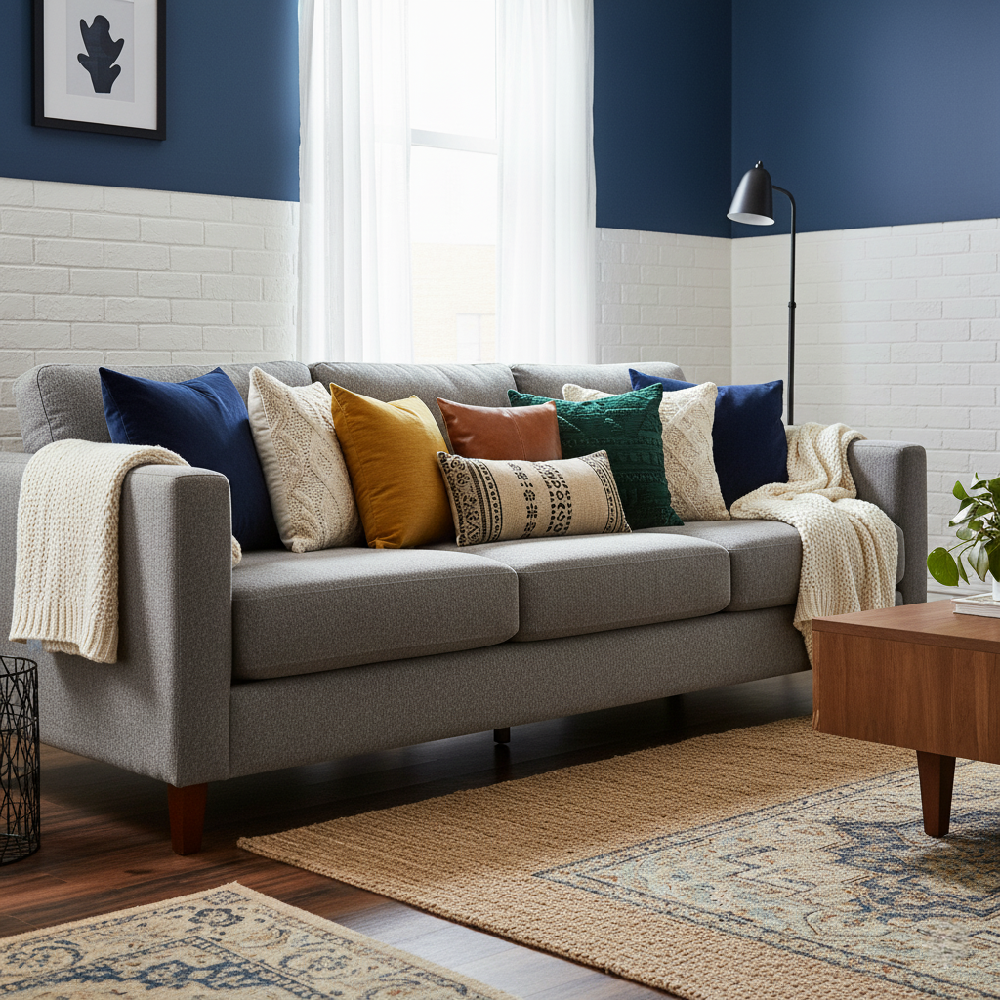
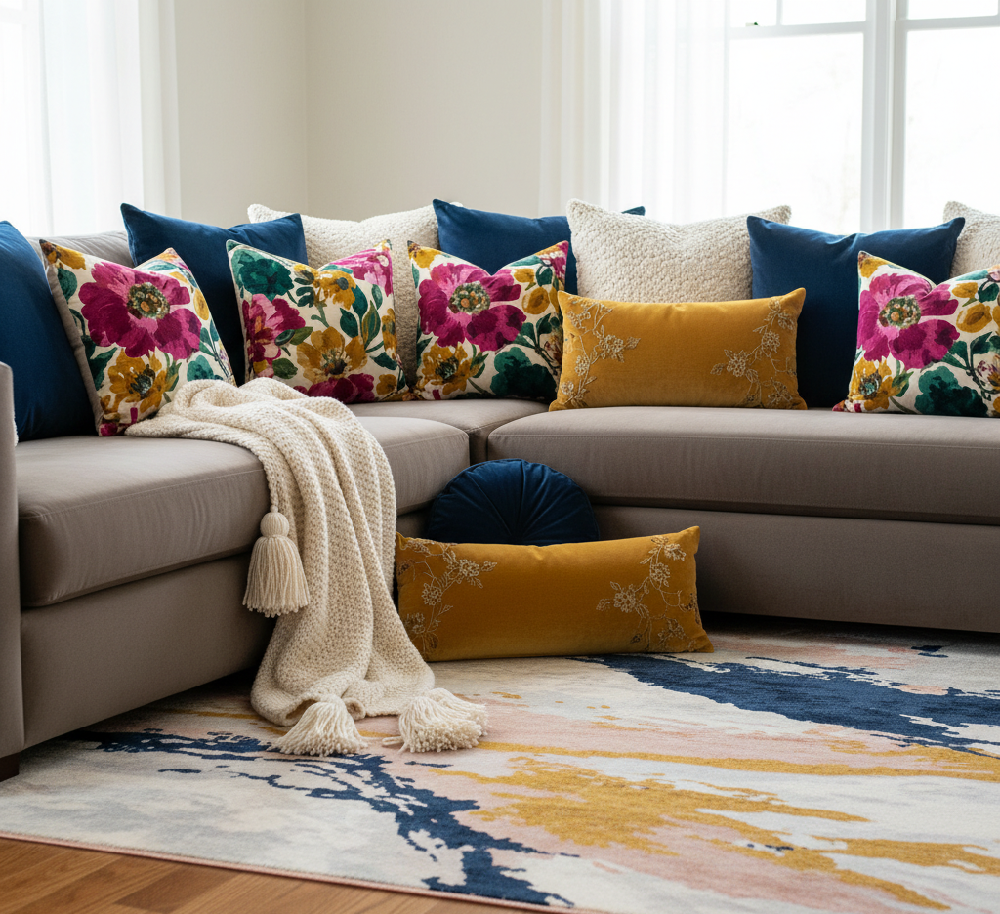
A grey sofa styled with a diverse, colourful cushion arrangement including navy, mustard yellow, and brown leather textures.


Part 1: Matching Cushions to Your Sofa's Shade


The depth of your gray determines the overall mood. Use this guide to create stunning contrast or subtle sophistication.


1. The Light Gray Sofa (Soft, Airy, and Versatile)


A pale gray (like dove gray or light ash) is closest to white, making it perfect for light, airy looks.

To Achieve... Cushion Colors to Use Why It Works
A Grounded, Cozy Look Deep Charcoal, Navy Blue, Forest Green. The high contrast instantly grounds the light sofa and adds depth without heaviness.
A Soft, Feminine Look Blush Pink, Creamy White, Soft Lilac. These gentle pastels complement the airy feel and introduce warmth and lightness.
A Coastal/Earthy Vibe Sandy Beige, Warm Linen, Pale Aqua. Mimics beach tones. Focus on natural textures like linen and jute.


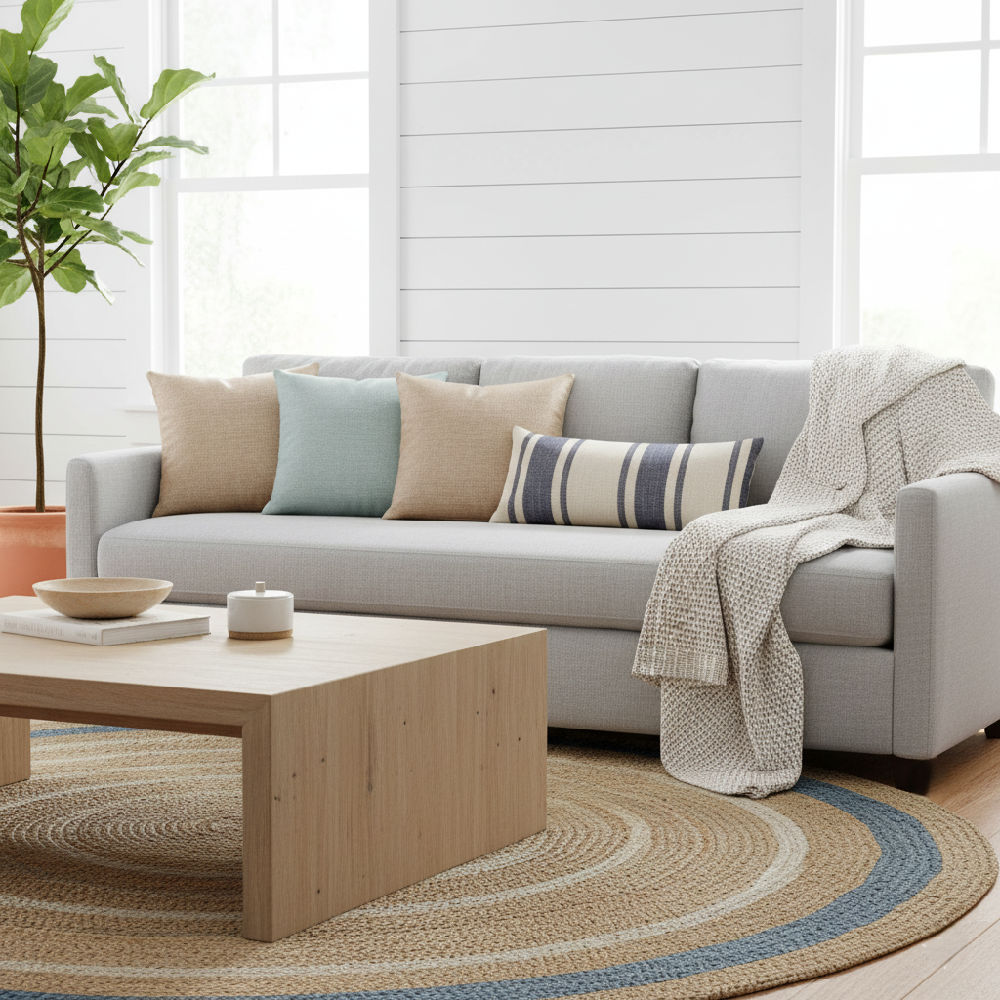
Light gray sofa accessorized with coastal and earthy cushions in pale blue, sandy beige, and navy stripes for an airy look.


2. The Dark Gray Sofa (Charcoal, Slate, and Dramatic)


A deep gray provides a dramatic, moody foundation. The goal is to brighten and balance.

To Achieve... Cushion Colors to Use Why It Works
A Modern, Punchy Look Mustard Yellow, Burnt Orange, Emerald Green. A dark gray makes bright colors 'pop' more intensely than any other neutral, preventing them from feeling childish.
A Sophisticated Contrast Crisp White, Bright Silver/Chrome, Marbled Patterns. White provides a striking, gallery-like contrast. Metallics enhance the sleek, modern feel of a dark gray.
A Rich, Jewel-Toned Look Deep Burgundy, Saturated Teal, Royal Blue. The dark gray anchors the rich colors, giving the room a luxurious, velvet-clad atmosphere.


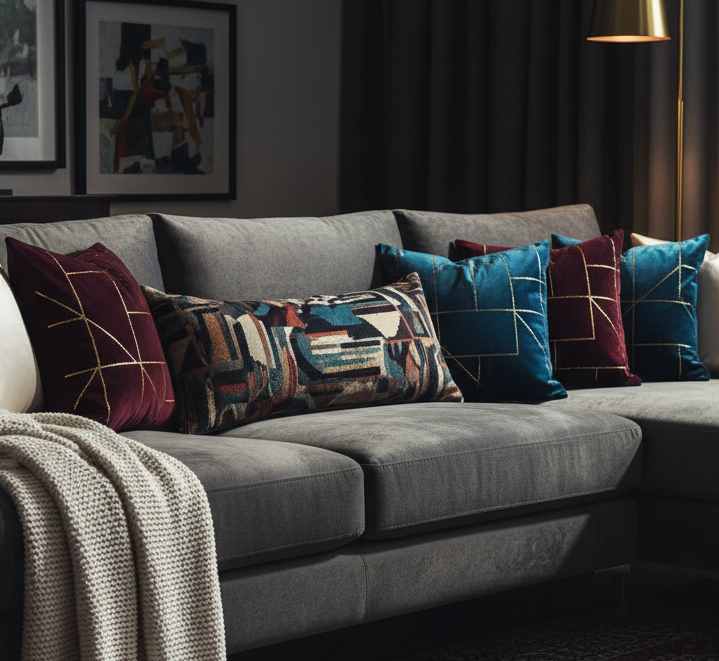
Dark gray sofa on a luxurious rug, featuring jewel-toned velvet cushions in burgundy and teal, and a bold patterned cushion.


Part 2: Working with the Gray Sofa's Undertone


This is the secret to professional-level styling. Every gray has a subtle undertone—blue, purple, or brown—that you need to either enhance or counteract.


1. The Cool-Toned Gray Sofa (Blue or Purple Undertones)


Your gray might look slightly blue or lavender in certain lights.

To Balance/Warm Up To Enhance/Go Cooler
Warm Hues: Mustard, Copper, Terracotta, Coral. Cool Hues: Navy, Sky Blue, Teal, Seafoam Green.
Action Plan: Use cushions in the warm hues to neutralize the coldness. Add a textural element like a jute rug to complete the warming effect. Action Plan: Go monochromatic! Layer various cool blues and greens to create a calming, cohesive, and tranquil space.


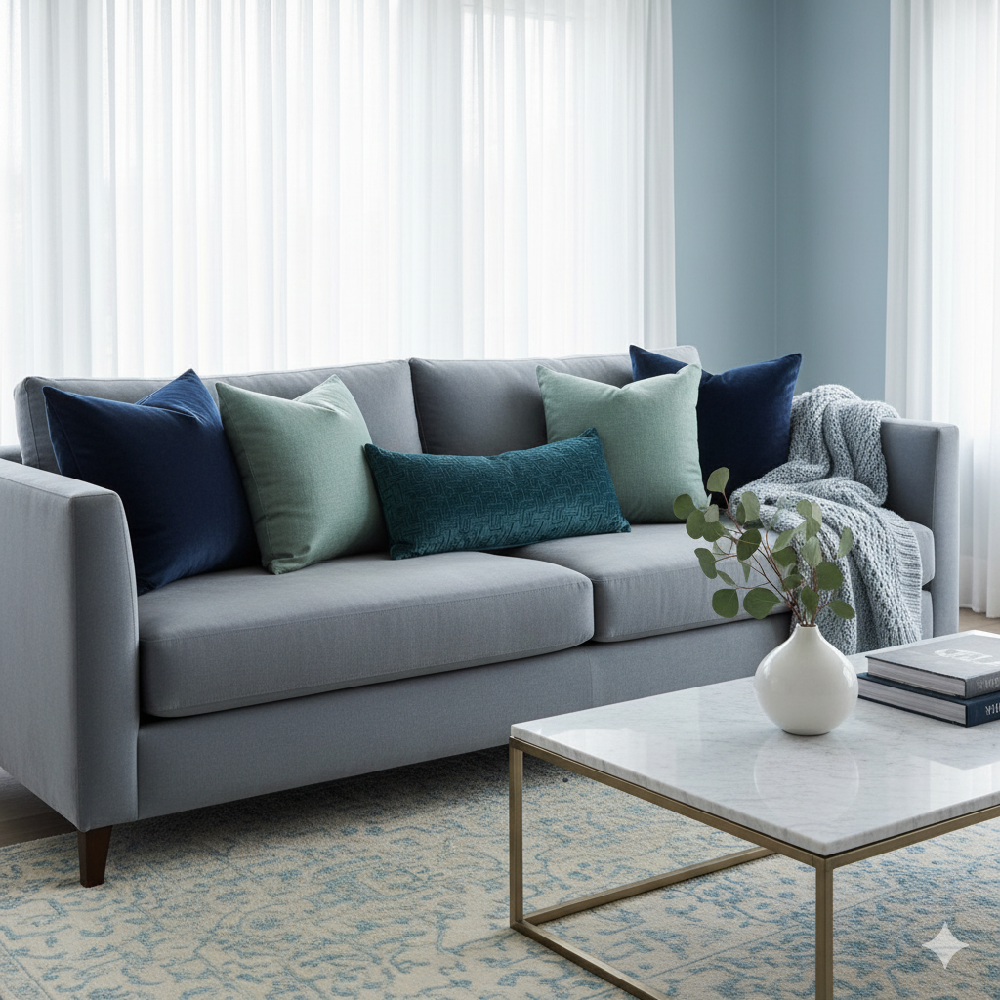
Cool-toned gray sofa styled with cushions in varying shades of monochromatic blue and seafoam green for a calming effect.


2. The Warm-Toned Gray Sofa (Greige or Brown Undertones)


Often called "greige" (gray + beige), this shade is inherently cozy and earthy.

To Balance/Cool Down To Enhance/Go Warmer
Cool Hues: Sage Green, Muted Plum, Soft Moss. Warm Hues: Cream, Caramel, Rust, Deep Cocoa.
Action Plan: Use cool, nature-inspired colors (especially greens) to cut the brown tones and keep the room from looking too heavy. Action Plan: Treat your greige sofa like a beige one. Layer cushions in rich, natural tones. Focus on textures like leather, faux fur, and wool.


Warm-toned greige sofa with earthy and neutral cushions, including brown leather and cream knit textures, creating a cozy vibe.


HOW TO CLEAN LEATHER COUCH. Get the expert guide to deep cleaning, conditioning, and 100% odor removal. Your sofa deserves it!


Part 3: Cushion Styling Techniques & Patterns


Color is only half the battle. Use texture and pattern to bring your cushion arrangement to life.


The 60/30/10 Pattern Rule


To make a stylish cushion collection feel effortless, use this ratio:

  • 60% Solid Color (Primary): The largest cushions, often mirroring the wall color or a neutral (white, cream, linen).

  • 30% Texture/Small Pattern (Secondary): A cushion in your chosen accent color, using a velvet, knit, or subtly striped fabric.

  • 10% Statement Piece (Tertiary): One highly detailed, large-scale pattern (e.g., a geometric print, a detailed floral, or an abstract art design) that incorporates your other two colors.


Our new guide reveals 3 easy methods to make any couch taller, even those without legs! Say goodbye to low-rider seating.


The Power of Texture


Texture is the difference between a flat look and a dynamic one. A gray sofa provides the perfect background for tactile cushions.

Texture Type Best for Which Sofa/Vibe
Velvet/Satin Dark Gray Sofa / Luxurious, Dramatic Vibe
Chunky Knit/Wool Warm Gray Sofa / Rustic, Hygge Vibe
Linen/Cotton Light Gray Sofa / Casual, Coastal Vibe
Faux Fur/Shearling Any Gray Sofa / High-Comfort, Seasonal Vibe


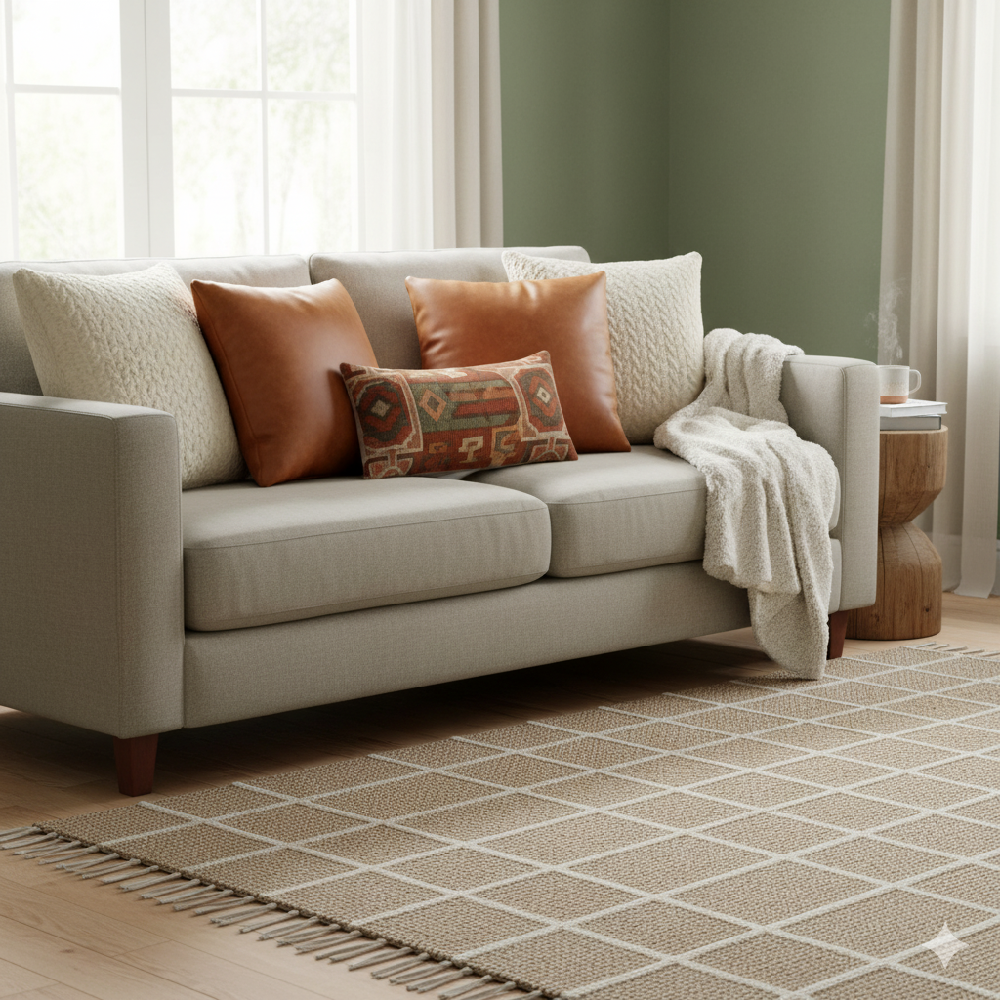
Close-up of a warm-toned gray sofa with highly textural cushions in cream boucle and burnt orange leather against a sage green wall.


Unique Pattern Ideas for Gray


To move beyond stripes and solids:

  • Global Prints: Indigo Shibori (works well with cool gray) or Ochre Mudcloth (stunning with warm gray).

  • Botanicals: A simple white and green leaf pattern keeps the room fresh and vibrant without overwhelming the neutral sofa.

  • Abstracts: Cushions with a few bold, painterly brushstrokes add an artistic, modern edge.


Final Pro Tip: The 2-2-1 Rule


When styling, don't use all the same size. For a standard 3-seater gray sofa:

  1. Two Large Back Cushions (e.g., 20x20 inches) in your Primary or Secondary color.

  2. Two Medium Cushions (e.g., 18x18 inches) in a Texture or Small Pattern.

  3. One Small Lumbar Cushion (e.g., 12x20 inches) in your boldest Statement Pattern.

Mix and match from the guides above, and your gray sofa will look perfectly styled every time!


From thrones of power to your cozy living room: Dive into the fascinating evolution of the sofa! 🛋️Discover the hidden history of your favorite couch in our latest blog post!

The Cocooning Sanctuary: Top 5 Bed Trends & The Anatomy of a 25-Year Sleep Investment

The modern bedroom is no longer a simple sleeping area; it is a holistic wellness sanctuary and a multi-functional hub. The design forecast for 2025–2026 reflects a desire for environments that are adaptable, deeply tranquil, and grounded in warmth.

At Abhi & Oak, we believe a bed is a 25-year investment. It must meet the dual demands of cutting-edge style and uncompromising structural quality. This guide breaks down the dominant aesthetic and technical elements defining the next generation of high-end sleep systems.


I. The 2025 Aesthetic: Embracing the Cocoon


The overarching design philosophy for the modern bedroom centers on restoration and tranquility. We are moving away from cold, sterile minimalism and embracing layered warmth, soft forms, and highly tactile materials—the "Cocooning Sanctuary" effect.


1. The Statement-Making Headboard


The upholstered headboard is the single most defining trend of 2025. Driven by the need for comfortable, active sitting (for working or reading in bed), headboards are growing in size and visual power.

  • Voluminous Forms: Look for curvy, plush, and voluptuous silhouettes that utilize generous cushioning to create a dramatic, yet deeply cozy aesthetic.

  • Textural Dominance: The new luxury is tactile. Trending fabrics include quilted velvet, textured boucle, and performance linen. These elements provide the visual punch needed as consumers shift toward simpler, less fussy bedding setups.


2. Low-Profile Platforms: Minimalism Reimagined


Platform beds remain popular for their clean lines and ability to create an illusion of space. They are the ideal choice for maximizing visual openness in smaller or standard rooms.

  • The Airy Look: Low-set silhouettes prevent the bed from dominating the room. This effect is enhanced by exposed legs (often tapered dowels or sleek metal supports) that keep the piece from overwhelming the floor space.

  • The Function: Platform frames naturally eliminate the need for a box spring, reducing overall cost and complexity.


3. The Architectural Canopy


At the opposite end of the spectrum, the modern canopy bed is returning as a powerful visual centerpiece for spacious master suites.

  • Structural Grandeur: Reimagined from heavy traditional designs, these are now sleek, architectural frames made from refined wood or modern metal. They maximize vertical impact and define the sleeping zone within high-ceiling rooms.

  • Unified Trend: Whether low-profile or monumental, the unifying factor is a preference for clean, architectural lines over traditional bulk.


HOW TO CLEAN LEATHER COUCH. Get the expert guide to deep cleaning, conditioning, and 100% odor removal. Your sofa deserves it!


II. The Convergence of Sleep and Technology


The contemporary bed is evolving into an intelligent, multi-functional system that supports both sleep and active living.


1. The Integrated Command Center Headboard


Headboards are transitioning into "functionally beautiful" pieces by integrating smart utility:

  • Tech Integration: Look for built-in charging stations with USB and Type-C ports, eliminating the clutter of bedside power cords.

  • Ambient Control: Integrated RGB LED light systems and subtle under-bed lighting for late-night navigation contribute to the personalized "sanctuary" ambiance.

  • Micro-Storage: Headboard shelving and slide-out compartments are tactical responses to the multi-functional bedroom, offering a streamlined, clutter-free alternative to large nightstands.


2. Adjustable Bases and Personalized Wellness


Adjustable beds are rapidly moving into the mainstream, driven by the focus on personalized ergonomics and wellness.

  • Core Functions: Key features include independent head and foot elevation (managed via one-touch presets) and built-in massagers.

  • Wellness Positions: Popular features include the anti-snore setting (gently lifting the head) and the zero-gravity position (relieving pressure on the spine and legs).


III. Structural Integrity: The Abhi & Oak Investment Quality


For an investment that lasts decades, the true value of a bed frame lies in the unseen structural components. We adhere to the gold standards of longevity.


1. Frame Construction: The Foundation of Durability


The material dictates the bed’s structural stability. At Abhi & Oak, we prioritize materials that resist warping, cracking, and shifting over time:

  • Gold Standard: Kiln-Dried Solid Hardwood (Oak, Maple, Beech). Kiln drying removes all residual moisture, preventing the wood from warping, which is essential for frames that house heavy mattresses or active components like adjustable bases.

  • High-Value Alternative: High-quality 7-13 layer Engineered Plywood, offering exceptional strength and stability at a more accessible price point than solid hardwood.


2. Joinery: The Secret to a Silent Frame


The stability of the frame relies on how it is assembled. Avoid frames relying on staples or nails alone.

  • Reinforced Joints: Look for robust techniques such as Mortise and Tenon joints, interlocking joints, and reinforced Corner-Blocks that are meticulously screwed, glued, and doweled. This ensures the frame remains silent and stable for decades.


3. Mattress Support: The Platform Essential


The support system is crucial for preventing mattress sagging and prolonging its life.

  • Slat Count: For a Queen-size frame, look for a minimum of ten to twelve closely spaced slats. This density is essential to evenly distribute weight and eliminate the need for a box spring.


IV. Tactical Space Planning and Selection


A successful purchase requires planning based on your room's dimensions and functional needs.


1. The 30-Inch Rule for Flow


Meticulously measure the space to prevent clutter and ensure comfortable traffic flow:

  • Ideal Clearance: Maintain a minimum of 24 inches (60 cm), and ideally 30 inches (75 cm), of clear pathway around all accessible sides of the bed. This allows for comfortable bed making and easy access to nightstands.

  • Proportionality: Use taller, statement headboards in high-ceiling rooms to anchor the scale, and low-profile platforms to visually expand small rooms.


2. Storage Solution: Lift vs. Drawer


Choose under-bed storage based on the frequency of access and required side clearance:

Storage Type Best For Storing... Space Clearance Needed Convenience Trade-off
Hydraulic Lift-Up Bed Bulky, seasonal items (duvets, luggage). Zero side clearance needed (uses vertical space). Low ease of daily access.
Drawer Storage Bed Frequently accessed, smaller items (linens, books). Requires substantial side clearance to open fully. High ease of daily access.


The Abhi & Oak Difference


The trends of 2025–2026 demand a sophisticated product—one that doesn't force a trade-off between style and structure.

By investing in a Kiln-Dried Solid Hardwood frame, reinforced with professional joinery, you are buying a bed designed to support advanced features like adjustable bases and multi-functional headboards for a generation.

Visit Abhi & Oak's Bed Collection to discover our collection, where every piece is an investment in ethical sourcing, superior craftsmanship, and your long-term wellness.

The purchase of a leather sofa

The purchase of a leather sofa is not a mere furniture transaction; it is a 25-year investment in the aesthetics, function, and comfort of your home. As design trends shift toward grounded luxury and deep relaxation, understanding both the current styles and the hidden structural quality is essential to avoid costly long-term mistakes.


I. The 2025 Leather Aesthetic: Top 5 Trending Sofas


Interior design is pivoting away from cool minimalism toward earth tones, warm neutrals, and grounded luxury. The trending shapes prioritize deep, adaptive comfort, making the living room a true sanctuary.


1. The Deep-Seated Sectional (The Sanctuary Piece)


Style Approximate Price Idea (3-4 Seater Sectional)
Deep-Seated Sectional ₹2,80,000 – ₹6,00,000+
Trend Focus Maximal Comfort. These are defined by expansive depth (often to in total depth) to accommodate full lounging, effectively distributing weight and creating a highly inviting, relaxed atmosphere.
Quality Check Requires a robust kiln-dried hardwood frame and High-Density Foam ( PCF) in the cushions to prevent structural sagging and seat breakdown under heavy use.


Low-profile modular sofa in light, almost white leather, arranged in a long configuration with two chaises. It has clean lines, slim arms, exposed dark metal legs, and is in a spacious room with floor-to-ceiling windows overlooking a city.


3. The Chesterfield (The Timeless Classic)


Style Approximate Price Idea (3-Seater)
Classic Chesterfield ₹1,80,000 – ₹3,50,000
Trend Focus Grounded Elegance. This timeless design continues to represent formal luxury and is often used to ground eclectic or modern spaces with a touch of classical sophistication.
Quality Check The gold standard Eight-Way Hand-Tied Springs are often found in this traditional, high-backed design, providing a soft, luxurious sit.
Stop Scrolling: The 5 Contemporary Sofas That Will Define Your Living Room

Sofa Savvy: 5 Contemporary Design Trends Elevating the Abhi & Oak Living Room


The sofa is the cornerstone of your living space—a piece of furniture that must deliver on both uncompromising comfort and enduring style. At Abhi & Oak, we believe the right design should not just fill a room, but define it.

Our contemporary collection draws inspiration from global design movements, focusing on architectural silhouettes and the meticulous sourcing of premium materials. If you're looking to anchor your home with a piece that transcends passing trends, here are five trending contemporary sofa designs that currently influence our aesthetic and elevate the modern living experience.


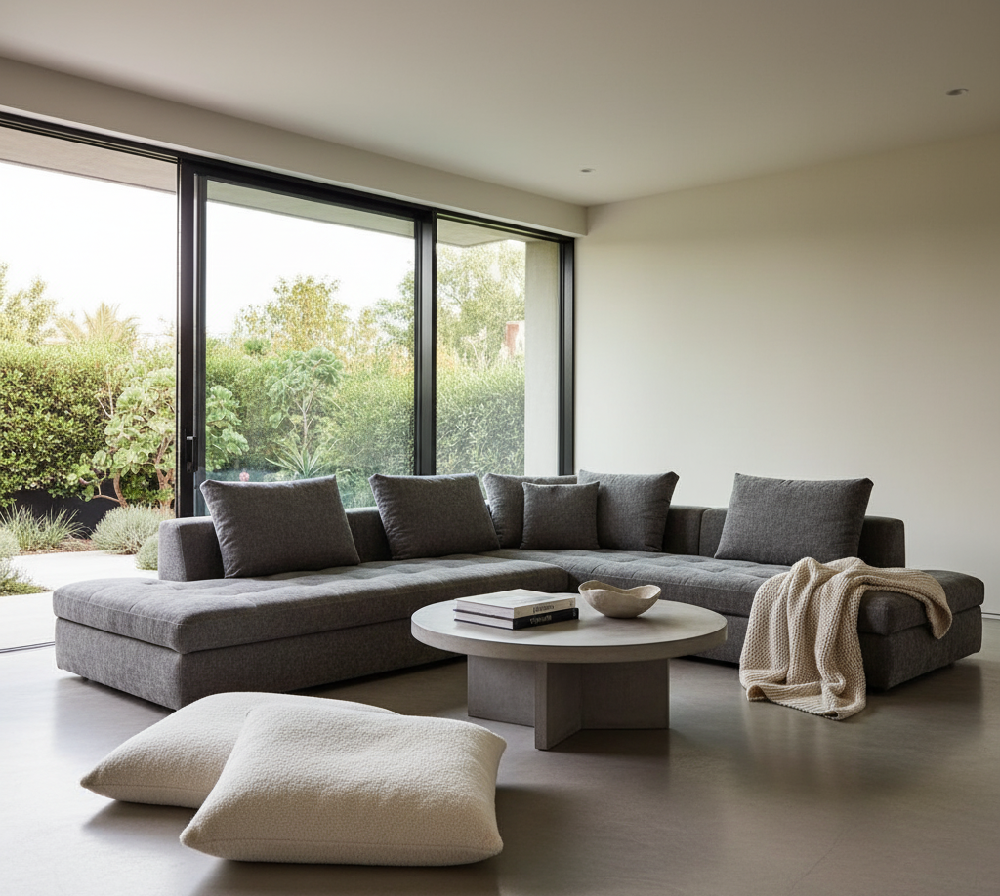
1. The Modular Marvel: The "Element" Collection


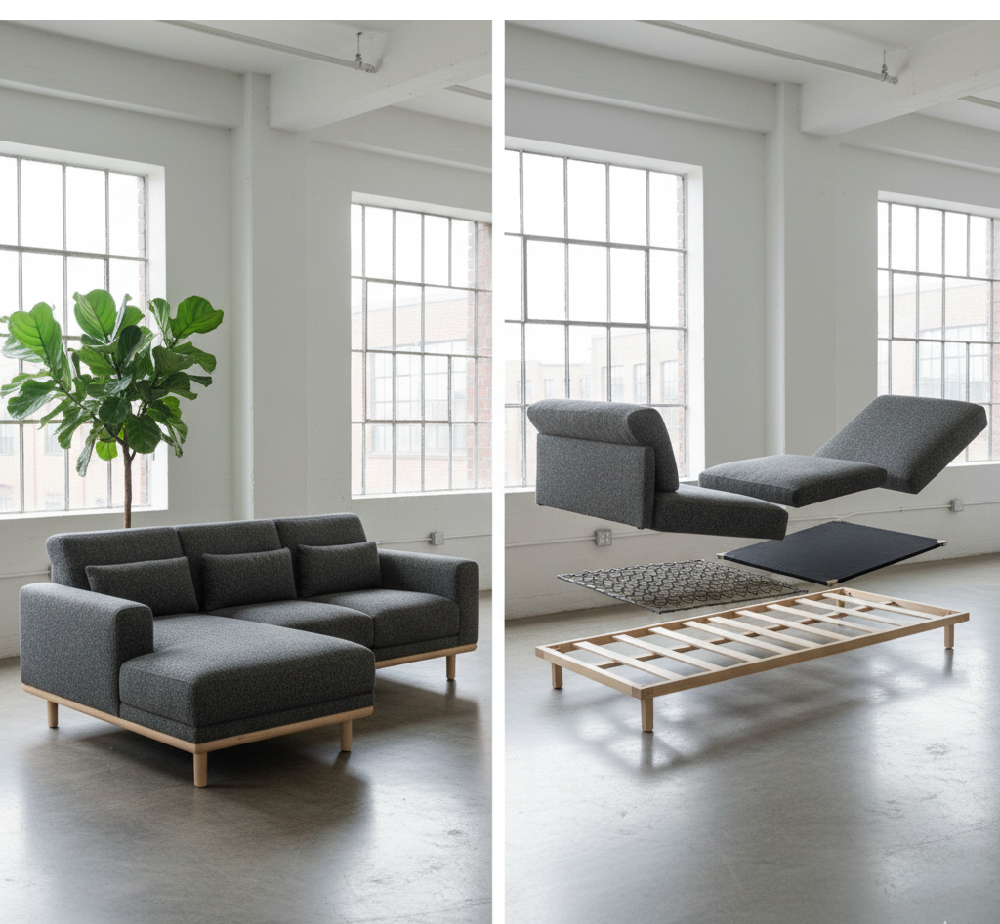
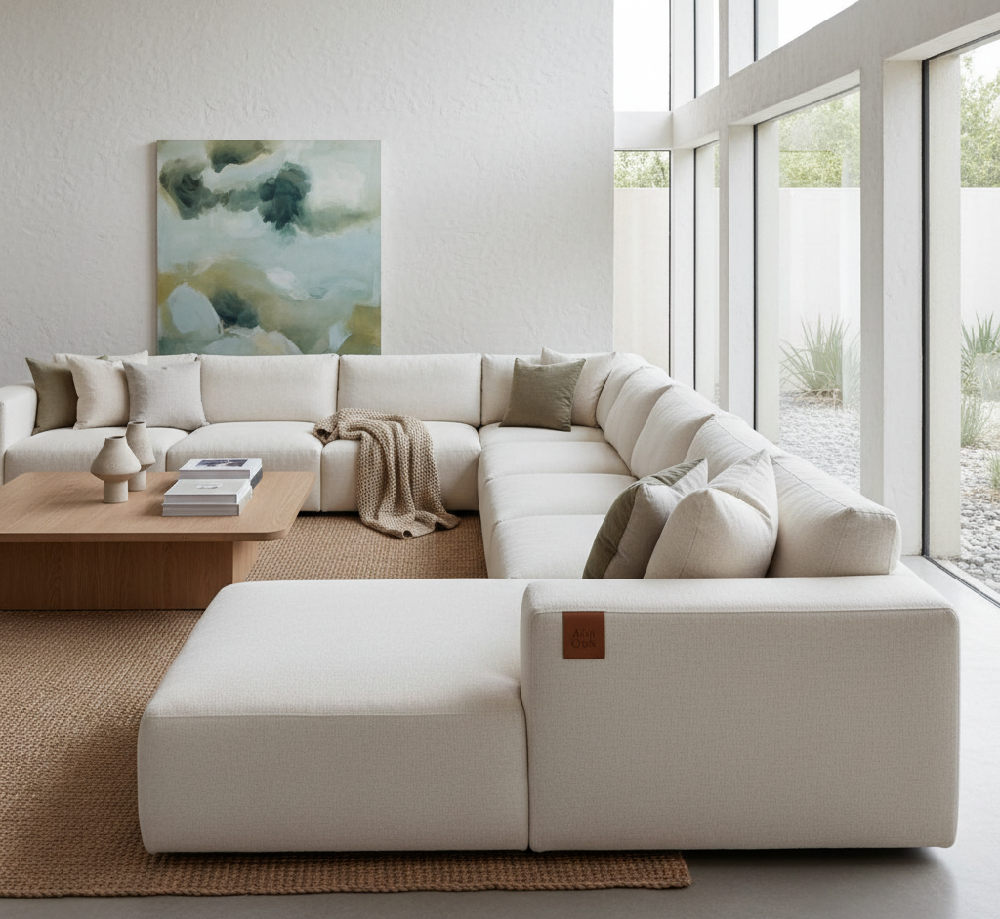
Gone are the days of rigid, fixed seating. The modular trend is built on the belief that your furniture should adapt to your life, not the other way around. Our modular sofas, exemplified by our "Element" collection, are composed of individual, reconfigurable components. They allow for effortless customization, providing a solution that is as flexible as it is visually striking.

At Abhi & Oak We elevate modularity with hidden connectors, fully finished side panels, and deep, feather-blend cushioning. This ensures that every configuration—from a sprawling sectional to a tailored chaise—looks intentionally designed, offering architectural versatility without sacrificing a luxury feel.

Perfect for: Grand rooms, open-plan homes, and dynamic households that value adaptable seating arrangements.


The Infinitely Reconfigurable Lounger. A system of adaptable components designed for the ever-changing contemporary home. Shape your space, don't just fill it.


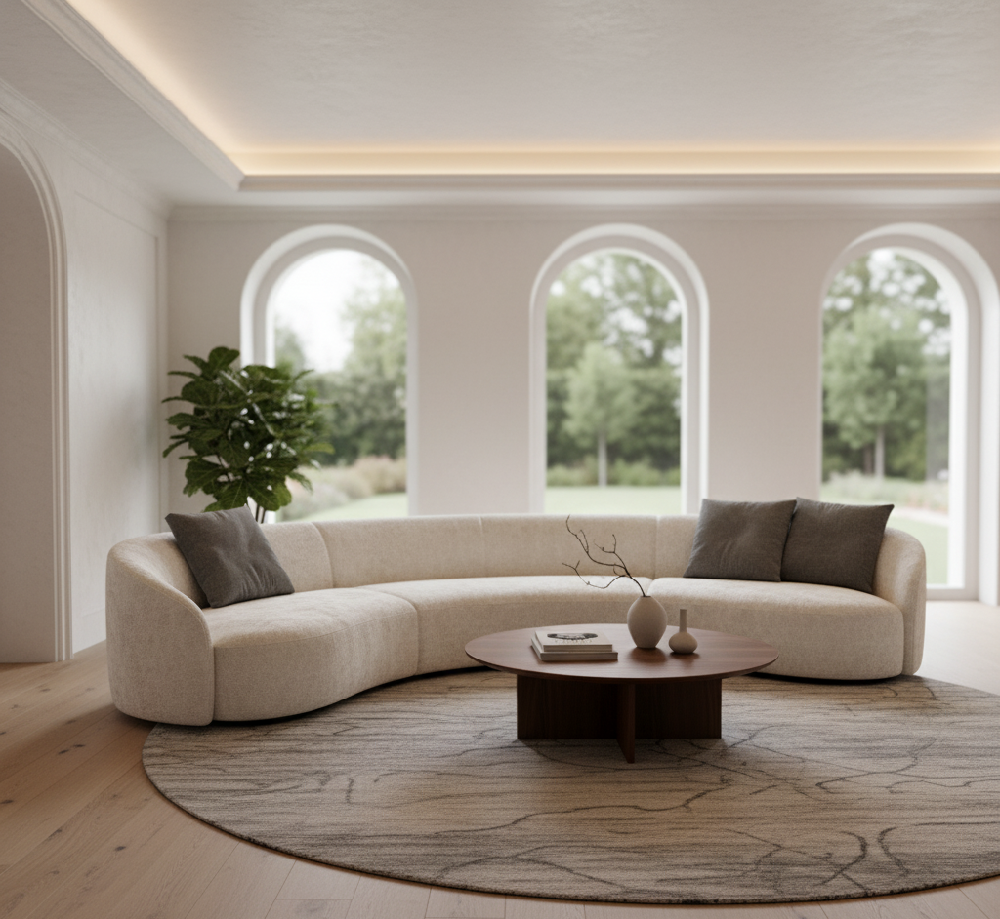
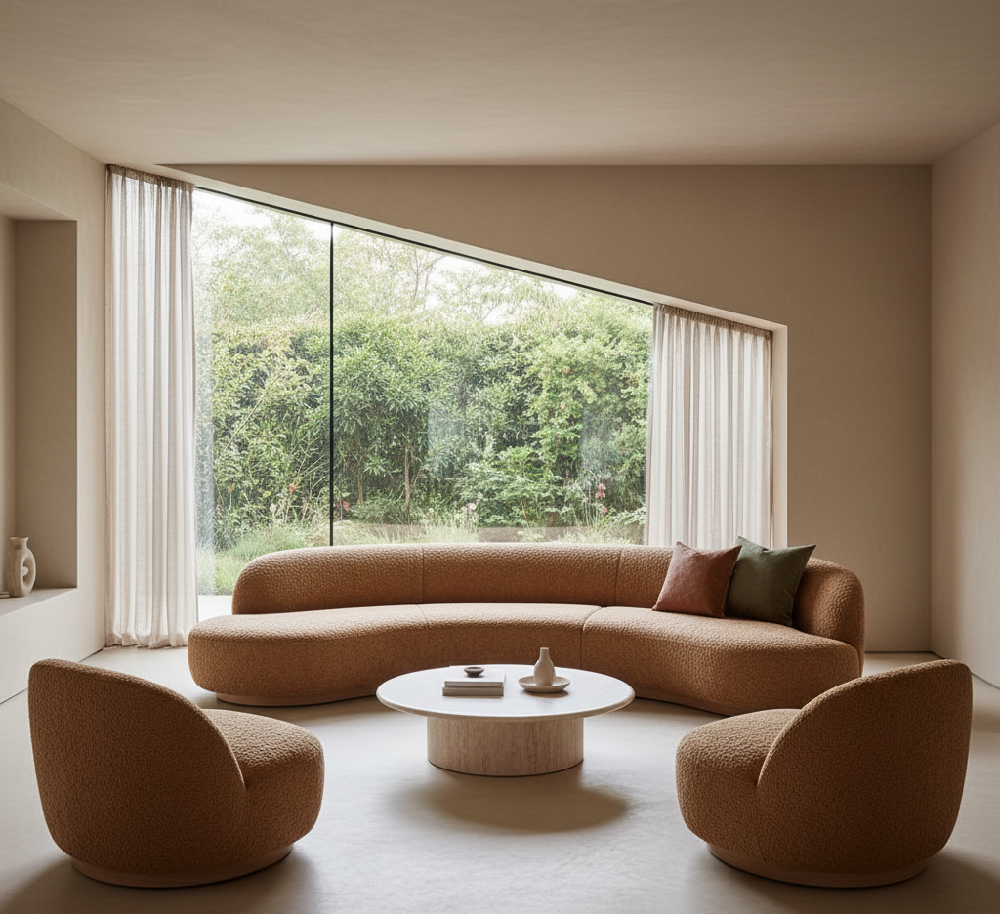
2. The Curved Connoisseur: The "Aura" Collection


In a world of sharp lines and functional angles, curved designs offer a welcome, sophisticated softness. Our "Aura" sofas embrace organic forms and graceful silhouettes, channeling a sense of intimate elegance reminiscent of 20th-century Italian design. The sweeping, fluid lines encourage face-to-face conversation and transform the sofa from a mere seat into a stunning, sculptural art piece.

At Abhi & Oak We wrap these sensual forms in luxurious, high-pile textures like bouclé and rich velvet, emphasizing the sofa’s sculptural quality. A subtle, recessed base often gives the piece a floating appearance, enhancing its light, elegant presence.

Perfect for: Creating a dramatic focal point, softening minimalist interiors, and adding a touch of timeless European glamour.


The Sculptural Conversation Starter. Embracing organic lines and elegant arcs, this design injects a feeling of soft, sophisticated flow into any room.


3. The Low-Slung Lounger: The "Loft" Collection


Effortless cool meets unparalleled relaxation in the low-slung aesthetic. Inspired by the serene, grounded designs of mid-century masters, the "Loft" collection features a close-to-the-floor profile, deep seats, and plush, oversized cushions. This design promotes a casual, yet highly sophisticated, lounging experience, while the low horizon line makes any room feel instantly more expansive and airy.

At Abhi & Oak We engineer these loungers with exceptional internal support and premium-grade, stain-resistant fabrics. The deep seating is not just for looks; it’s a commitment to true sink-in comfort, ensuring the sofa maintains its clean lines and structure even with constant use.

Perfect for: Casual-chic homes, spaces with large windows, and homeowners who prioritize deep, relaxed comfort.


The Grounded, Effortless Retreat. Featuring a low profile and deep seating, this design is the essence of casual-chic comfort and spacious, airy living.


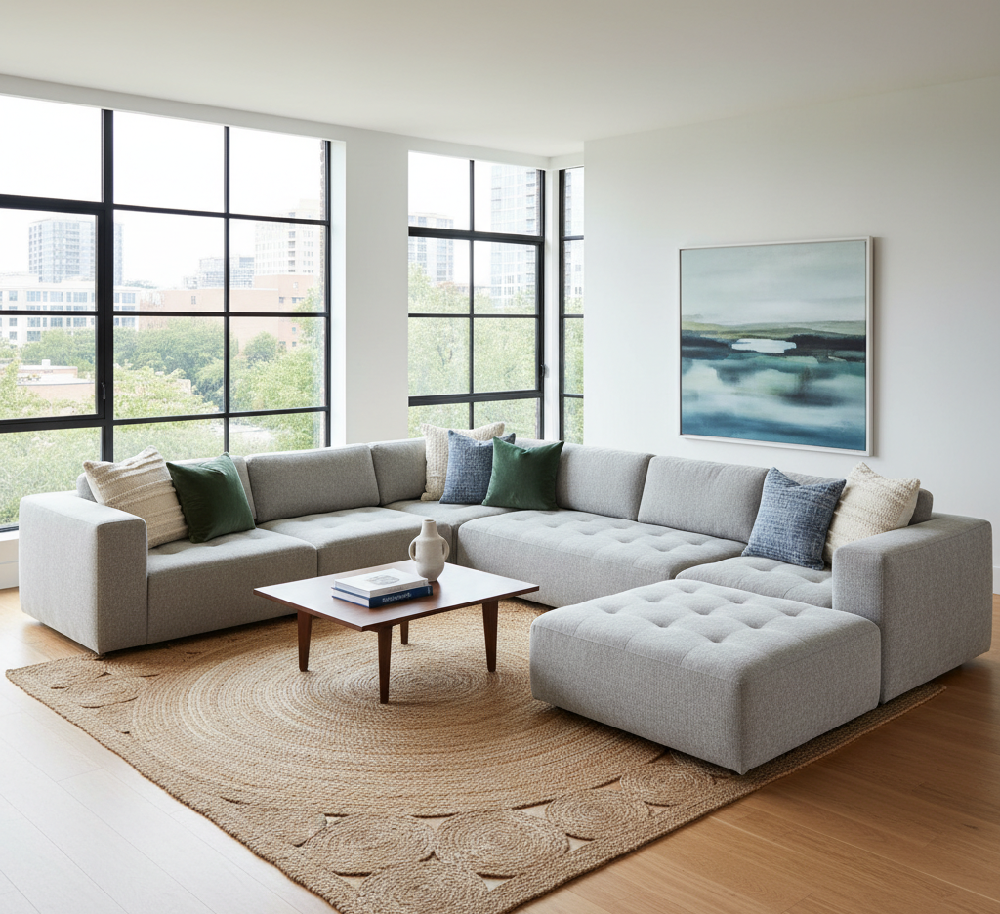
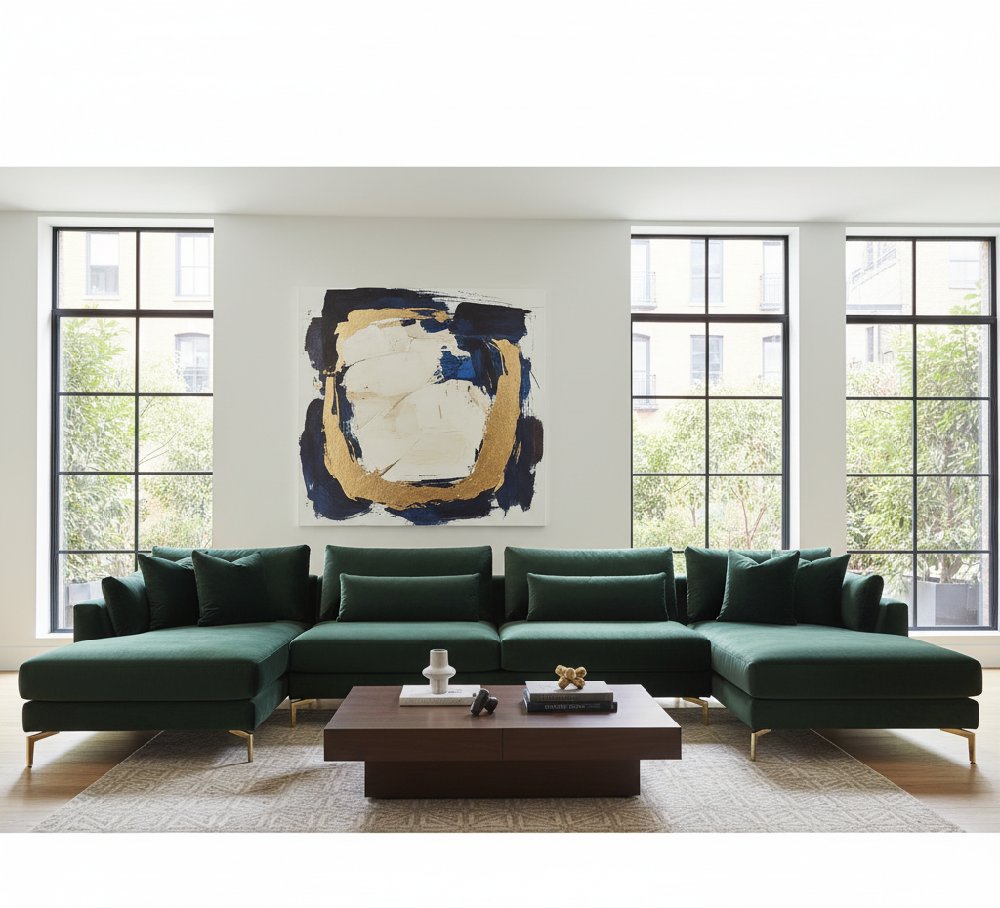
4. The Statement Sectional: The "Manhattan" Collection


The sectional is redefined in the contemporary context. Our "Manhattan" collection moves beyond simple function to become a grand, declarative statement. These large-scale designs combine sophisticated proportions with bespoke tailoring, serving as the ultimate social hub for entertaining and family life. They are built for scale and luxury.

At Abhi & Oak We focus on clean, tailored lines, often incorporating elegant details like slender metal legs or rich wooden trim that lift the mass of the sofa. Available in saturated jewel tones and high-quality leather, these sectionals command attention and provide a palatial level of seating without appearing bulky.

Perfect for: Large family rooms, formal living spaces, and those who require generous, uncompromising seating.


HOW TO CLEAN LEATHER COUCH. Get the expert guide to deep cleaning, conditioning, and 100% odor removal. Your sofa deserves it!

The Grand, Tailored Hub. Massive in presence yet refined in detail, this sectional is built for luxurious entertaining and defining large-scale luxury.


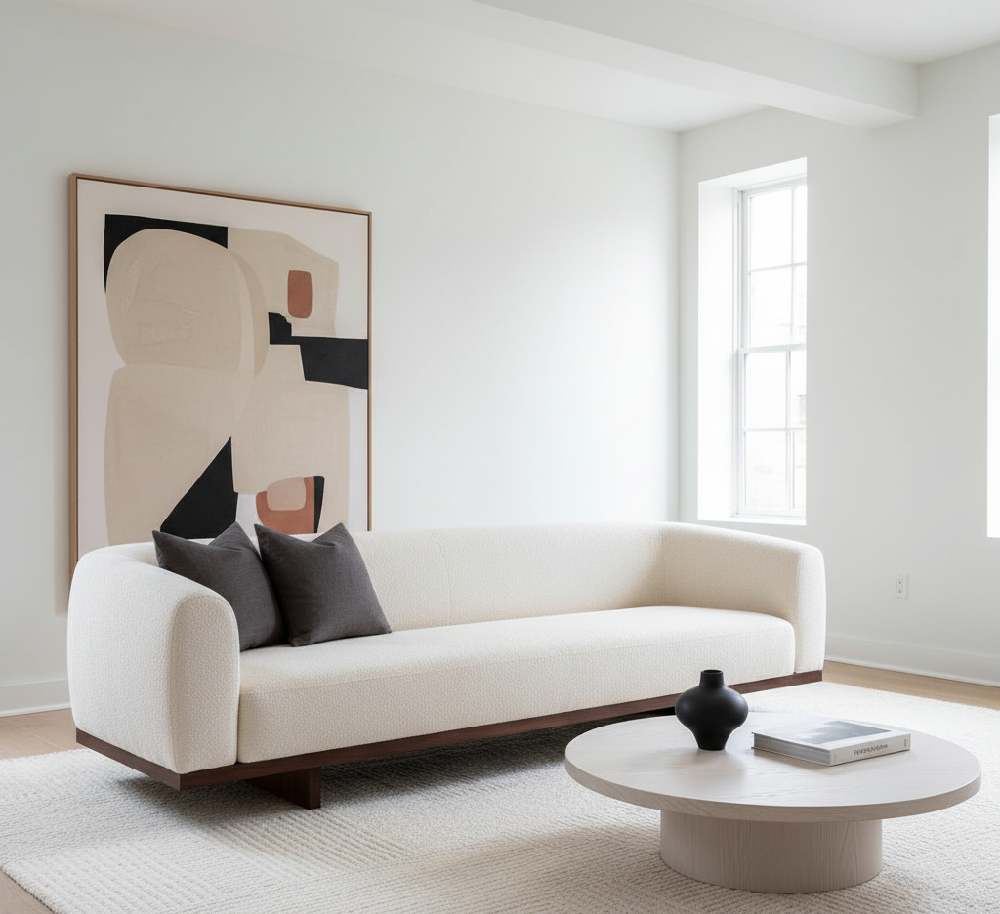
5. The Sculptural Sofa: The "Axis" Collection


For the discerning collector, the sculptural sofa is where art and function seamlessly intersect. Our "Axis" sofas deliberately challenge conventional form with unique, asymmetric backs, unconventional armrests, and bold outlines. These pieces are not merely seating; they are works of art designed to be appreciated from every angle.

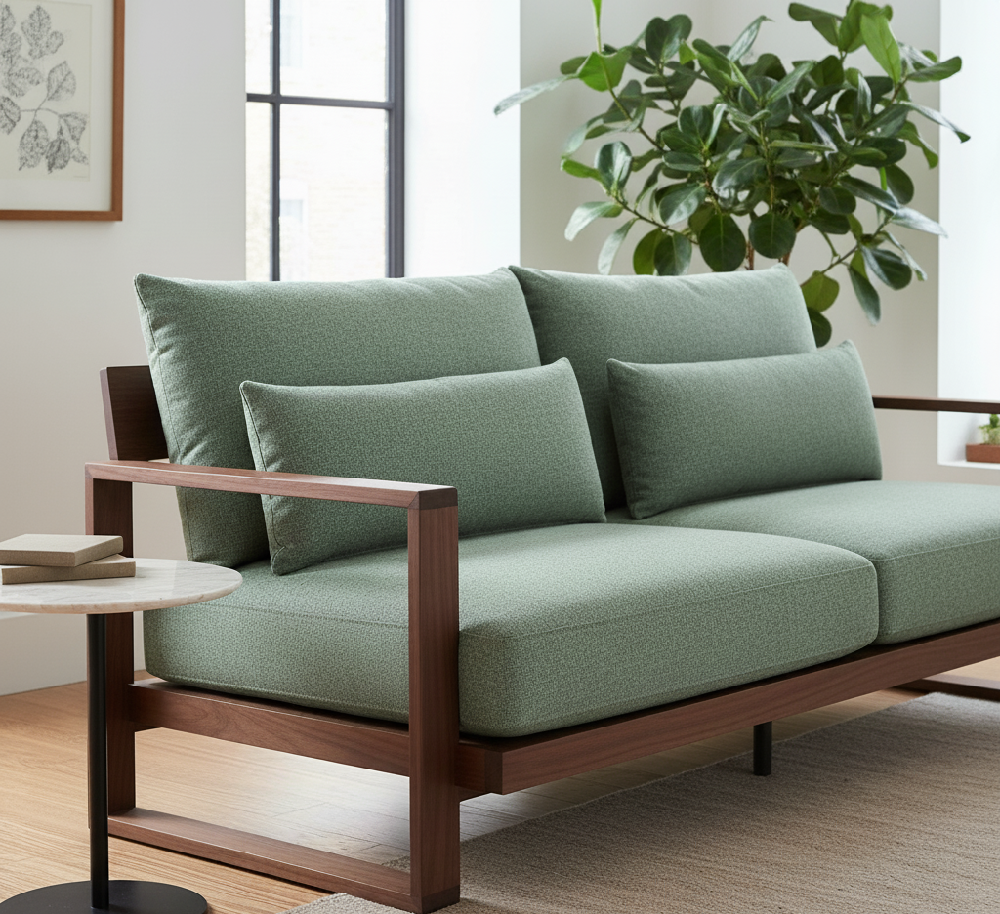
At Abhi & Oak Every element—from the wood grain on the exposed base to the meticulous stitching on the upholstery—is executed with high-end craftsmanship. These sofas are our most artistic designs, inviting viewers to engage with their form and allowing you to express a highly curated, artistic sensibility in your home.


The Art Piece You Can Sit On. A bold, artistic form that defies conventional design. This sofa is an unforgettable focal point and a true expression of style.

Perfect for: Minimalist interiors, art lovers, and making a single, unforgettable design statement.


Discover the difference that architectural design and uncompromising quality make. Explore the full range of Abhi & Oak sofa collections and anchor your living room in enduring contemporary luxury.


From thrones of power to your cozy living room: Dive into the fascinating evolution of the sofa! 🛋️Discover the hidden history of your favorite couch in our latest blog post!

Beyond Aesthetics: The 5 Global Sofa Design Strategies Defining Luxury Comfort

The Definitive Guide: Abhi and Oak's Top 5 Trending Sofa Designs for the Global Market (2025/2026)


The international sofa market is undergoing a profound shift, prioritizing holistic well-being, material science, and architectural adaptability. At Abhi and Oak, we have synthesized the strategic drivers defining consumer purchasing through 2026. A sofa is no longer just furniture; it's an essential component of a restorative domestic environment and a conscious, heirloom-quality investment.

Here are the top 5 trending sofa design philosophies, backed by global market data, that are redefining modern luxury.


1. Sculptural Curvature: The Neuro-Wellness Imperative


The Trend: The most dominant aesthetic is the move toward Sculptural Curvature. This is driven by neuro-wellness and the "Home as Sanctuary" philosophy. Rigid symmetry is out; soft, organic, and fluid forms are in.

The Abhi and Oak Expertise (The Why): We don't use curves just for style. Curved shapes are scientifically proven to be less confrontational and more inviting than angular pieces, naturally fostering better conversation flow and psychological comfort. Our curved sofas are strategic tools designed to transform your living area into a "Restorative Realm." They function as sculptural statement pieces that promote energy and motion, merging functional utility with expressive art.

Material Depth: We select high-texture materials like our proprietary Performance Bouclé or rich Classic Italian Leather for these forms. The pronounced texture adds dimension where color is often restrained, optimizing the sensory experience (neuroaesthetics) that reduces stress and promotes tranquility.


2. Adaptive Modularity: Engineering for the Circular Economy


The Trend: Adaptive Modularity is a response to the "Adaptability Mandate" of modern hybrid lifestyles. Consumers resist disposable culture, demanding highly flexible seating systems that offer dynamic utility and exceptional long-term value.

The Abhi and Oak Expertise (The How): Our modular systems transcend basic sectional components. True modularity is a "game-changer" because it guarantees longevity and supports the Circular Economy.

  • Custom Ergonomics: Inspired by high-end Italian metrics, our modules offer customization beyond width to include depth, allowing granular ergonomic personalization for every user.

  • Built-in Repairability: The inherent structural flexibility of our modular design allows for the easy repair and replacement of individual parts, actively reducing waste and guaranteeing a longer product lifespan.

  • Longevity Foundation: Our commitment starts with the frame: FSC-certified wood or robust solid metal frames, often coupled with cold-moulded polyurethane foam. This sophisticated engineering guarantees structural integrity, uniformity, and resistance, which allows us to market our products based on verifiable durability.


3. Low-Profile & Grounded: Organic Minimalism in Configuration


The Trend: The prevailing silhouette is defined by a relaxed yet refined low-profile, grounded aesthetic. This look features deep seating, wide frames, and minimal leg height, perfectly suited for open layouts.

The Abhi and Oak Expertise (The Function): This style is the foundation of Organic Minimalism. By minimizing the visual mass, the design visually declutters and expands the room, supporting a serene and organized feel. The sofa acts as a grounded base, allowing other layered textures and subtle accents to take prominence.

Configurations of Comfort: The market favors configurations that maximize lounging, such as U-shaped sectionals and double chaise sectionals. We engineer these with internal quality designed to last: High-Density (HD) foam paired with Natural Latex or recycled foam fills—sustainable alternatives that ensure consistent ergonomic support and resist the compression that causes premature sagging.


HOW TO CLEAN LEATHER COUCH. Get the expert guide to deep cleaning, conditioning, and 100% odor removal. Your sofa deserves it!


4. Warm Neutrals & Earth Palettes: The Grounding Base


The Trend: There is a definitive strategic shift away from cool grays toward palettes rooted in warmth, nature, and emotional comfort. This is the Warm Neutrals strategy, which establishes a sophisticated, grounding base.

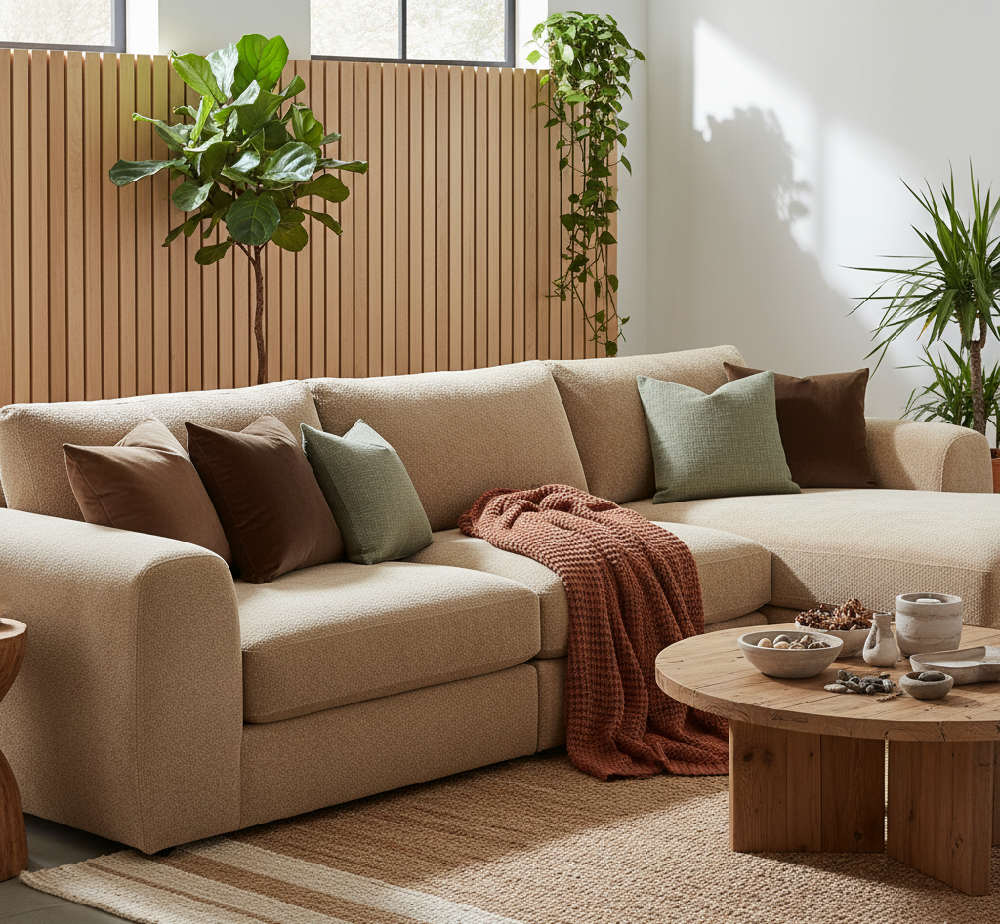
The Abhi and Oak Expertise (The Color Psychology): We prioritize foundation colors that convey longevity and sanctuary. Shades like Mocha Mousse (the Pantone-aligned warm beige), deep taupe, and rich chocolate browns are set to become the "new neutrals."

  • Tactile Depth: These warm, earthy tones are crucial because they maximize the visual depth and richness of high-tactile fabrics like bouclĂ© and chenille. The heavy texture in a neutral shade optimizes the current preference for profound visual interest without reliance on excessive color.

  • Biophilic Connection: Our palette is heavily influenced by biophilic earth tones—olive green, sage, and deep terracotta—which are intentionally used to ensure a calming, grounded aesthetic that supports mental well-being and nature connection.


Our new guide reveals 3 easy methods to make any couch taller, even those without legs! Say goodbye to low-rider seating.


5. Performance Sustainability: Durability as the Core Ethic


The Trend: Sustainability is no longer a niche feature; it is fundamentally defined by durability and longevity. Sophisticated consumers demand verifiable proof that their products reduce waste and stress.

The Abhi and Oak Expertise (The Trust): We integrate durability into every component to meet the strategic demand for "heirloom quality."

  • Certified Fill Materials: We avoid non-biodegradable polyurethane foam where possible, prioritizing Natural Latex and high-resilience, recycled foam for lasting comfort and ecological responsibility.

  • Guaranteed Structure: Our metal and FSC-certified wood frames are structural guarantees, often accompanied by a multi-year warranty, proving our commitment to engineered longevity (the European high-end standard).

  • Performance Upholstery: We utilize fabrics with advanced engineering, such as those that commit to recycling 100% of fabric scraps and use low-VOC (Volatile Organic Compounds) finishes. This ensures the textile is not only stain-resistant and durable but also contributes to a healthier indoor air quality, directly supporting the conceptual trend of neuro-wellness within the home.


Conclusion: Your Custom Investment with Abhi and Oak


The international market has spoken: the future of seating is complex, conscious, and customizable. At Abhi and Oak, we don't just sell sofas; we deliver expertly engineered, restorative furniture systems. Whether you need a low-profile sectional in a grounding Mocha Mousse bouclé or a custom, curved piece in premium leather, our expertise in custom sofa design allows us to align your vision with global standards of quality and deliver enduring value.


From thrones of power to your cozy living room: Dive into the fascinating evolution of the sofa! 🛋️Discover the hidden history of your favorite couch in our latest blog post!